The Road to 2028: Why Montenegro’s EU Breakthrough Matters for Albania and the Future of Enlargement
Montenegro’s latest accession conference is not only a technical step toward membership. It is evidence that Brussels has entered a new enlargement era shaped by Ukraine, security, money, and the fear of geopolitical vacuum in the Western Balkans.
The Road to 2028: Why Montenegro’s EU Breakthrough Matters for Albania and the Future of Enlargement
Montenegro’s latest accession conference is not only a technical step toward membership. It is evidence that Brussels has entered a new enlargement era shaped by Ukraine, security, money, and the fear of geopolitical vacuum in the Western Balkans.
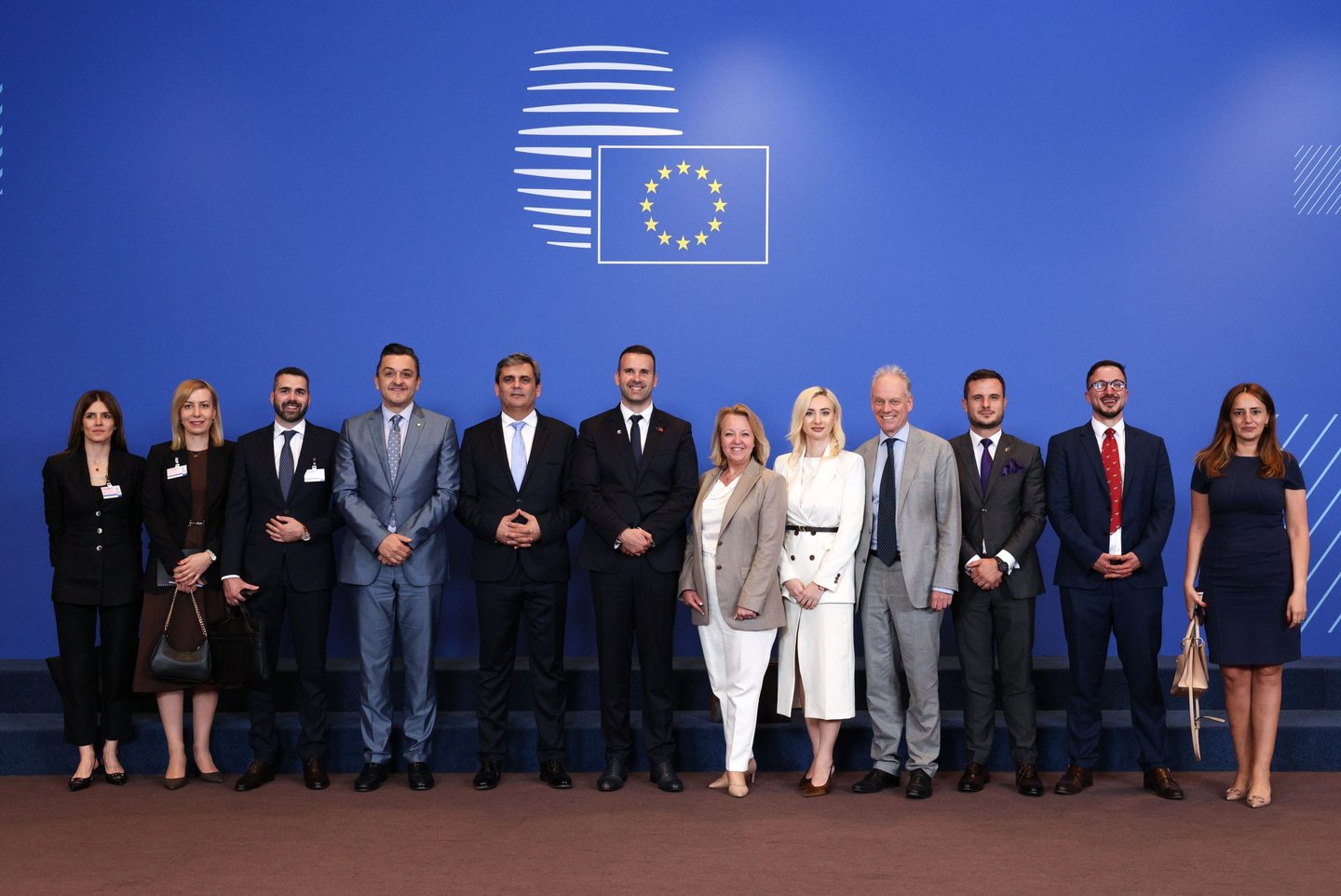
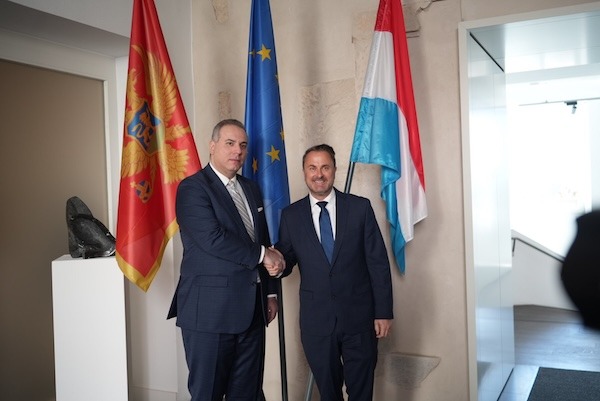
When EU ministers meet in Luxembourg on 15 June for the 27th Accession Conference with Montenegro, the formal agenda will appear modest. The meeting is expected to provisionally close negotiations on Chapter 2, covering the free movement of workers, and Chapter 28, covering consumer and health protection. In the language of Brussels, this is a technical step in a long negotiation process. In political terms, however, it signals something much larger: the European Union is moving again on enlargement after more than a decade of hesitation.
Montenegro has long been described as the frontrunner among Western Balkan candidates. It applied for EU membership in December 2008, received candidate status in 2010 and opened accession negotiations in June 2012. So far, all 33 screened chapters have been opened, and the closure of further chapters in 2025 and 2026 has placed the country closer than any other Western Balkan candidate to membership. The Council’s own agenda for the 15 June conference notes that the latest meeting follows the provisional closure of Chapter 21 in March 2026, Chapter 32 in January 2026, and five additional chapters in December 2025.
Yet the decisive signal came not from the technical chapters, but from the language of European Council President António Costa at the EU–Western Balkans Summit in Tivat. Costa said that the EU had begun drafting Montenegro’s accession treaty and that, for the first time since Croatia joined in 2013, Europe was “really counting down to the next enlargement.” He also referred to the possibility of Montenegro becoming the EU’s 28th member state by 2028. That wording matters. Accession treaty drafting is not a routine political compliment; it is the legal and institutional preparation for possible membership. Reuters reported in April that EU ambassadors had approved the creation of a working party to draft Montenegro’s accession treaty, describing it as a significant advancement in the country’s accession path.
The reason Montenegro is moving faster is not only that Podgorica has made progress. It is also that Europe has changed. Before Russia’s full-scale invasion of Ukraine, enlargement was often treated as a slow bureaucratic process dominated by judicial reform, anti-corruption benchmarks and administrative alignment with the acquis. Since 2022, it has increasingly become a security instrument. Brussels now sees the Western Balkans less as a waiting room and more as a strategic region where delay creates space for Russian influence, Chinese investment leverage, organized crime and democratic fatigue.
This is why the phrase “geopolitical investment” has become central to EU enlargement language. Costa used it at the Tivat summit, and European leaders have repeated similar formulations in recent years. The message is clear: enlargement is no longer only about rewarding reforms. It is about securing Europe’s political geography. The Guardian reported that the Tivat summit was framed around the EU’s need to prove it is capable and willing to take in new members, with leaders including Emmanuel Macron, Friedrich Merz and Ursula von der Leyen stressing the strategic importance of the Western Balkans in light of Russia’s war in Ukraine.
Montenegro is the easiest test case for this new strategy. It is small, with around 600,000 citizens. It is already a NATO member. It has aligned with EU sanctions against Russia. It has fewer bilateral disputes than Serbia, North Macedonia or Kosovo. It is politically easier to absorb than Ukraine and institutionally more advanced than Bosnia and Herzegovina. Reuters noted that while Montenegro still faces major hurdles on corruption, judicial independence and organized crime, it remains the most realistic candidate for the EU’s next enlargement.
But Brussels is not giving Montenegro a free pass. The Commission’s 2025 enlargement assessment said the country had made significant progress, including closing several chapters, but stressed the need for continued reforms, broad political consensus and delivery on the target to close negotiations by the end of 2026. The same logic appears in the revised enlargement methodology applied to Montenegro and Serbia in 2021, which placed stronger emphasis on fundamentals, political steering and reversibility. In plain language, Montenegro may be the frontrunner, but the EU still wants guarantees that rule of law reforms are not only adopted on paper but implemented in practice.
This is where the hidden politics of enlargement becomes visible. Germany, France, the Netherlands, Belgium and Luxembourg have reportedly floated safeguards for future EU members, including enhanced rule-of-law monitoring and possible temporary limits on voting rights in critical areas such as budget, foreign policy and future enlargement. The purpose is to avoid importing future veto crises into the Union, particularly after years of disputes with Hungary over rule of law and EU decision-making. For Montenegro, Albania, Ukraine and Moldova, this signals a new reality: accession may move faster, but membership may come with stricter mechanisms than in previous enlargements.
The legal foundation remains Article 49 of the Treaty on European Union, under which any European state respecting EU values may apply to become a member. Candidates must also meet the Copenhagen criteria: stable democratic institutions, rule of law, human rights, protection of minorities, a functioning market economy and the ability to take on the obligations of membership. The European Parliament’s fact sheets emphasize that progress depends largely on each country’s own merits, while Parliament must consent to any accession.
Money is the other side of the story. The EU’s Growth Plan for the Western Balkans, adopted by the Commission in November 2023, aims to integrate Western Balkan partners into parts of the EU Single Market, advance regional economic cooperation, deepen EU-related reforms and increase pre-accession funding. The plan is backed by a €6 billion Reform and Growth Facility, combining grants and loans, and is designed to make accession feel tangible before formal membership.
This financial architecture explains why Brussels is now talking about gradual integration. The EU knows that citizens in candidate countries have grown tired of distant promises. Roaming, payments, transport corridors, digital infrastructure, energy networks and access to parts of the Single Market are meant to show that integration has practical benefits before a flag is raised in Brussels. On 4 June 2026, the Council authorised talks on extending the EU’s “Roam Like at Home” scheme to the Western Balkans, though each partner must align with the EU roaming acquis before joining.
The security dimension is equally important. Montenegro’s Frontex agreement entered into force on 1 March 2025, allowing joint operational activities with the European Border and Coast Guard Agency. The EU has also adopted European Peace Facility assistance for Montenegro’s armed forces, including equipment for extreme cold weather, CBRN defence and helicopter-borne search and rescue. These are not symbolic gestures. They show how enlargement now overlaps with border control, defence readiness, hybrid threat resilience and foreign policy alignment.
For Albania, Montenegro’s progress is both an opportunity and a warning. Albania has moved quickly since accession talks formally advanced. The eighth accession conference with Albania, held on 26 May 2026, confirmed the fulfilment of interim benchmarks under Cluster 1, the Fundamentals cluster, and set closing benchmarks for chapters including judiciary and fundamental rights, justice, freedom and security, democratic institutions, public administration reform and economic criteria. The Council stated that this step puts the EU and Albania in a position to start closing negotiating chapters.
That is a major development. Albania opened all negotiating clusters across 2024 and 2025, with the final cluster opened in late 2025. The Commission’s enlargement communication also noted that Montenegro and Albania had declared ambitions to close accession negotiations by 2026 and 2027 respectively, while emphasizing that the process remains based on merit.
In comparative terms, Montenegro is closest to membership because it has already provisionally closed a significant number of chapters and has entered the accession treaty-drafting phase. Albania is now arguably the fastest-moving Western Balkan candidate after Montenegro, especially after meeting interim benchmarks in the Fundamentals cluster. Serbia remains strategically important but politically complicated by rule-of-law concerns, relations with Kosovo and alignment with EU foreign policy. North Macedonia remains burdened by bilateral disputes. Bosnia and Herzegovina faces deep structural and constitutional obstacles. Kosovo remains blocked by non-recognition from five EU member states. Ukraine and Moldova carry enormous geopolitical weight but face war, security and institutional challenges of a different scale.
For Albania, the real question is whether momentum can survive scrutiny. Environmental law is one example. Reuters recently reported that the European Commission warned Albania to align with EU environmental law amid controversy over a proposed resort backed by Jared Kushner and Ivanka Trump. That case shows how accession is no longer an abstract diplomatic process; every major development project, procurement decision, judicial reform and environmental choice can become part of the membership test.
The likely Brussels compromise is becoming clearer. The EU wants to accelerate enlargement, but it also wants safeguards. It wants candidate countries closer to the Single Market, but not inside the institutions before they are ready. It wants to reward reformers, but not repeat what many in western capitals view as the mistakes of earlier enlargements. It wants Montenegro by 2028 if possible, Albania soon after if reforms continue, and Ukraine and Moldova moving forward for geopolitical reasons — but it also wants to protect the Union’s capacity to function.
The winners from this new phase are the candidates that combine reform momentum with geopolitical alignment. Montenegro is first. Albania is next in line if it maintains progress. EU construction, energy, telecoms, transport, cybersecurity and financial service sectors also stand to gain from infrastructure and market integration. The losers are those who rely on delay, ambiguity, foreign interference or domestic political obstruction. Enlargement fatigue is no longer the only mood in Brussels. Strategic urgency has entered the room.
Five unanswered questions remain. Can Montenegro complete reforms quickly enough for 2028? Will the EU ratify a new accession treaty without domestic resistance in member states? Will safeguards for new members create a second-class membership debate? Can Albania keep reform momentum while avoiding environmental, corruption and governance setbacks? And can the EU enlarge while also reforming its own budget, voting rules and institutions?
The five investigations journalists should pursue next are equally clear: who is shaping the new safeguards for future members; which companies benefit from the Growth Plan and infrastructure funding; how Russian and Chinese influence networks operate in the Western Balkans; whether Albania’s environmental and rule-of-law alignment matches Brussels’ expectations; and how EU member states privately rank Montenegro, Albania, Ukraine and Moldova in terms of realistic accession timelines.
Over the next 24 months, three developments will matter most: whether Montenegro closes all remaining chapters and signs an accession treaty; whether Albania begins closing chapters after meeting its Fundamentals benchmarks; and whether the EU agrees on institutional safeguards that could redefine what membership means for the next generation of entrants.
The 27th Accession Conference with Montenegro is therefore not just another meeting in Luxembourg. It is a signal that enlargement has returned as one of the European Union’s central strategic projects. Montenegro may be the first to cross the line, but Albania should read the moment carefully. The road to 2028 is not only Montenegro’s road. It is a test of whether the Western Balkans can finally move from Europe’s waiting room into Europe’s political future.