
Shqipëria në Pragun e Evropës
Shqipëria në Pragun e Evropës
Nga korridoret e Brukselit te prova reale e shtetit shqiptar
Nga Spartak Fikaj
Bruksel | 26 Maj 2026
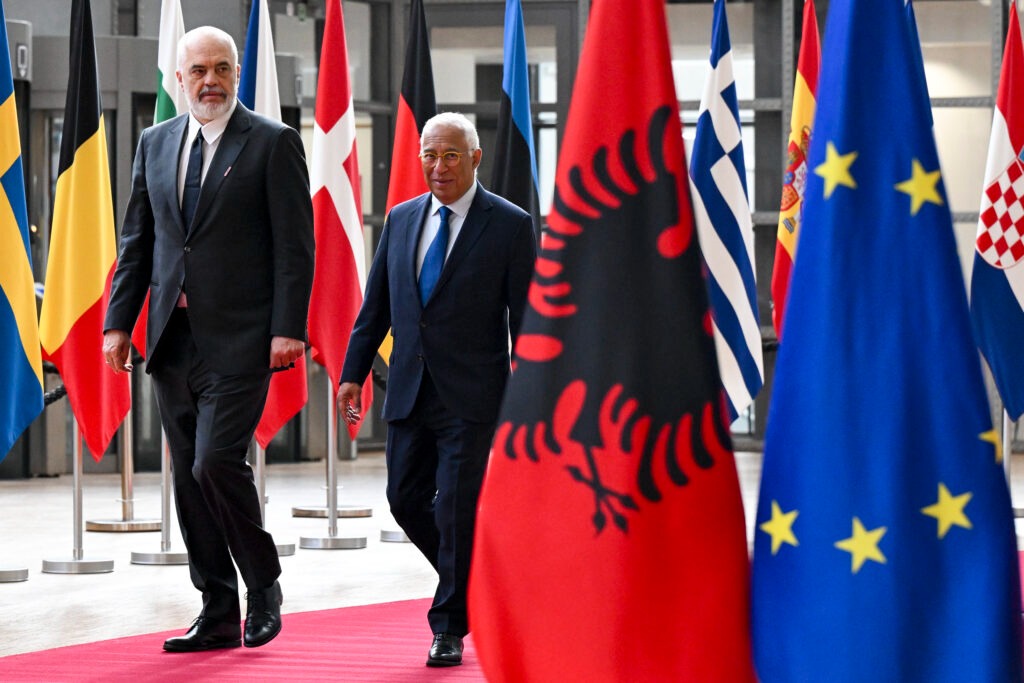
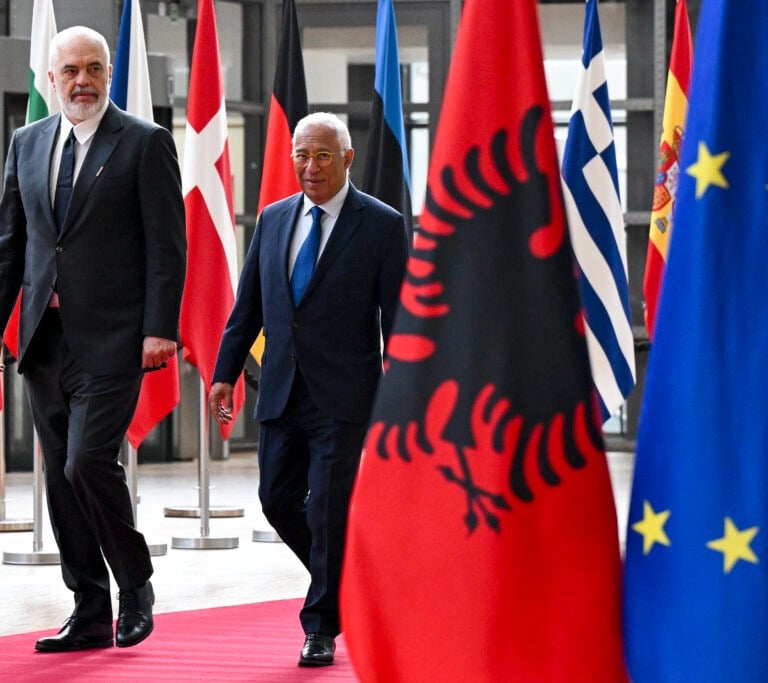
Në zemër të lagjes evropiane të Brukselit, aty ku burokracia shpesh mbulon historinë me gjuhë teknike dhe formulime diplomatike, Shqipëria hyri këtë javë në një nga momentet më delikate dhe më domethënëse të rrugëtimit të saj drejt Bashkimit Evropian.
Në pamje të parë, Konferenca e 8-të Ndërqeveritare Shqipëri–BE dukej si një tjetër takim rutinë mes diplomatëve evropianë dhe delegacionit shqiptar. Kamerat ishin vendosur në hyrje të ndërtesës së Këshillit të BE-së, gazetarët prisnin deklaratat zyrtare, ndërsa delegacionet hynin dhe dilnin mes protokollit të zakonshëm evropian.
Por pas buzëqeshjeve ceremoniale dhe gjuhës së kontrolluar diplomatike, mesazhi real ishte shumë më i thellë:
Brukseli po sinjalizonte se Shqipëria nuk trajtohet më vetëm si një vend kandidat nën monitorim, por si një pjesë potenciale e arkitekturës strategjike të Bashkimit Evropian.
Dhe kjo ndryshon rrënjësisht natyrën e negociatave.
Një fjali që kaloi pa u kuptuar në Shqipëri
Deklarata më e rëndësishme e ditës nuk erdhi nga Tirana.
Ajo erdhi nga Presidenca e Këshillit të Bashkimit Evropian.
Marilena Raouna, zv/ministre për Çështjet Evropiane e Qipros, deklaroi:
“Enlargement is a geopolitical necessity for the EU.”
Në shqip:
“Zgjerimi është një domosdoshmëri gjeopolitike për Bashkimin Evropian.”
Në Bruksel, fjalët peshohen me kujdes ekstrem.
Dhe kjo fjali tregon një ndryshim historik në mënyrën se si BE e sheh Ballkanin Perëndimor.
Dhjetë vite më parë, zgjerimi diskutohej si proces teknik:
reforma,
kapituj,
standarde,
administratë.
Sot, pas luftës në Ukrainë dhe tensioneve në rritje globale, zgjerimi shihet si çështje sigurie strategjike.
Në korridoret evropiane ndihej qartë se Ballkani nuk po diskutohej më vetëm si projekt integrimi, por si pjesë e mbrojtjes politike dhe gjeostrategjike të kontinentit.
Kjo është arsyeja pse Shqipëria ka fituar një rëndësi të re në sytë e Brukselit.
Çfarë ndodhi realisht në konferencë?
Në aspektin teknik, Bashkimi Evropian konfirmoi se Shqipëria ka përmbushur të ashtuquajturat:
“Interim Benchmarks”
për Klasterin 1 — “Themeloret”.
Për publikun e zakonshëm, kjo mund të tingëllojë si terminologji burokratike pa shumë kuptim.
Por në strukturën e negociatave evropiane, ky është një nga momentet më kritike të gjithë procesit të anëtarësimit.
Sepse “Themeloret” nuk janë thjesht një grup kapitujsh.
Ato janë zemra politike e negociatave.
Brenda këtij klasteri ndodhen:
drejtësia,
shteti ligjor,
korrupsioni,
institucionet demokratike,
administrata publike,
ekonomia funksionale,
liria,
siguria,
dhe të drejtat themelore.
Pikërisht këto fusha kanë qenë për vite të tëra pika më e dobët e Shqipërisë në raport me Bashkimin Evropian.
Dhe pikërisht këtu Brukseli ka qenë më skeptik.
Momenti që ndryshon gjithçka
Ajo që shumë media shqiptare nuk e shpjeguan mjaftueshëm është rëndësia reale politike e këtij vendimi.
Deri tani, Shqipëria ndodhej në fazën e hapjes së kapitujve.
Pas kësaj konference, Shqipëria hyn në fazën e mbylljes së tyre.
Dhe në negociatat evropiane ekziston një rregull i pashkruar që diplomatët në Bruksel e përsërisin shpesh:
“Kapitujt mund të hapen politikisht.
Por mbyllen vetëm me prova.”
Kjo është arsyeja pse dokumenti zyrtar i BE-së përdor me shumë kujdes shprehjen:
“solid track records and lasting results.”
Në gjuhën diplomatike të Brukselit kjo do të thotë:
jo më reforma në letër,
jo më premtime politike,
jo më retorikë për Evropën,
por rezultate konkrete dhe të qëndrueshme.
Dënime reale.
Institucione funksionale.
Pavarësi e drejtësisë.
Luftë e vazhdueshme kundër korrupsionit.
Jo për disa muaj.
Por për vite.
Fjala që dëgjohej më shpesh në bisedat informale: SPAK
Në deklaratat publike, zyrtarët evropianë ruajtën gjuhën klasike diplomatike.
Por në diskutimet joformale mes gazetarëve, diplomatëve dhe analistëve në Bruksel, një emër përmendej vazhdimisht:
SPAK.
Për vite me radhë, Shqipëria është perceptuar në Evropë si një shtet ku korrupsioni politik dhe ndikimi mbi institucionet ishin pjesë strukturore e sistemit.
Reforma në drejtësi dhe krijimi i SPAK-ut kanë ndryshuar pjesërisht këtë perceptim.
Megjithatë, skepticizmi nuk ka zhdukur.
Përkundrazi.
Shumë diplomatë evropianë besojnë se testi i vërtetë fillon tani:
nëse institucionet anti-korrupsion do të mund të funksionojnë të pavarura edhe kur përballen me presione të mëdha politike dhe ekonomike.
Pikërisht për këtë arsye, deklaratat e Komisioneres për Zgjerimin, Marta Kos, u interpretuan në Bruksel si një mbështetje e kujdesshme — por jo si një çek i bardhë për Tiranën.
Mesazhi i saj ishte i qartë:
Reformat duhet të vazhdojnë.
Dhe rezultatet duhet të jenë të pakthyeshme.
Deklarata e Edi Ramës dhe mesazhi i fshehur për Evropën
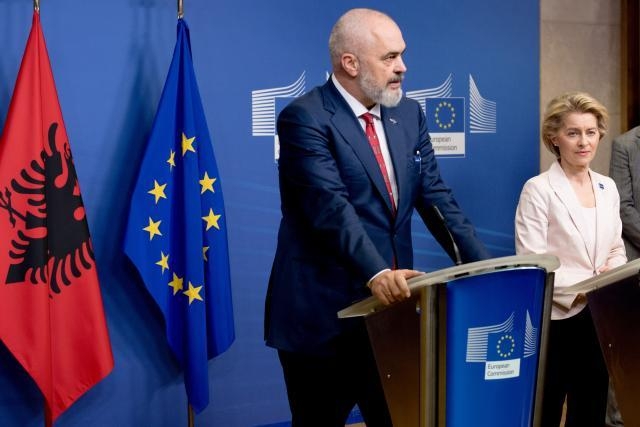
Një nga momentet më interesante të ditës erdhi gjatë komunikimit të Kryeministrit Edi Rama me mediat.
Kur u pyet mbi debatet e brendshme në Bashkimin Evropian për të drejtën e vetos së shteteve të ardhshme anëtare, Rama deklaroi:
“Ne jemi fanatikë të Bashkimit Evropian.”
Në Shqipëri, kjo fjali u interpretua kryesisht si deklaratë politike pro-evropiane.
Në Bruksel, ajo u lexua ndryshe.
Ajo ishte një sinjal i drejtpërdrejtë për vendet skeptike të Evropës:
Francën,
Holandën,
dhe disa shtete veriore,
që kanë frikë se zgjerimi mund të sjellë brenda Unionit vende problematike apo destabilizuese.
Në thelb, Rama po përpiqej t’i siguronte partnerët evropianë se Shqipëria nuk synon të bëhet një “Hungari e re” brenda BE-së.
Ishte një mesazh i menduar me kujdes.
Dhe në Bruksel, mesazhe të tilla dëgjohen me shumë vëmendje.
Lufta reale sapo ka filluar
Pavarësisht atmosferës optimiste të konferencës, askush në institucionet evropiane nuk po flet për anëtarësim të afërt automatik.
Përkundrazi.
Shumë zyrtarë evropianë e shohin këtë moment si hyrjen e Shqipërisë në fazën më të vështirë të negociatave.
Sepse tani Bashkimi Evropian nuk do të gjykojë më premtimet politike.
Do të gjykojë:
funksionimin real të shtetit,
rezistencën e reformave,
pavarësinë institucionale,
dhe aftësinë e Shqipërisë për të ndërtuar standarde evropiane të qëndrueshme.
Në Bruksel ekziston ende një pyetje që shumë diplomatë nuk e bëjnë publikisht, por që ndihet në çdo diskutim serioz mbi Shqipërinë:
A janë reformat shqiptare të forta mjaftueshëm për t’i mbijetuar presionit politik të së ardhmes?
Pikërisht kjo pyetje do të përcaktojë ritmin e kapitujve që do të mbyllen në vitet e ardhshme.
Një moment historik — por jo fundi i historisë
Konferenca e 8-të Ndërqeveritare nuk ishte fundi i rrugës evropiane të Shqipërisë.
Ajo ishte momenti kur Bashkimi Evropian i tha Tiranës:
“Ju keni hyrë në fazën ku fjalët nuk mjaftojnë më.”
Dhe ndoshta për herë të parë pas shumë vitesh, pyetja në Bruksel nuk është më:
“A dëshiron Shqipëria të bëhet pjesë e Evropës?”
Pyetja reale tani është shumë më e vështirë:
A është Shqipëria gati të funksionojë si një shtet evropian — edhe kur askush nuk e sheh?
THE LAGOON THAT BELONGS TO EUROPE
How a Battle Over an Albanian Wetland Became a Test of Europe's Environmental Credibility
By Spartak Fikaj
Just after sunrise, the waters of Narta Lagoon begin to glow.
The first light of the Adriatic morning spreads across the wetland in shades of silver and gold, illuminating a landscape that appears untouched by conflict. Flamingos stand motionless in the shallows. A Dalmatian pelican glides low over the reeds before disappearing into the distance. The only sounds are birdsong, wind, and water.
It is difficult, standing here, to imagine that this tranquil corner of Albania has become the center of one of the most consequential environmental disputes in southeastern Europe.
Yet beneath the stillness lies a conflict that reaches far beyond the shores of the lagoon. Scientists, conservation organizations, government ministries, investors, lawyers, and international institutions have spent years debating the future of the Vjosa–Narta–Zvërnec ecosystem. What began as a national infrastructure project has evolved into a broader question about how modern societies balance economic development with environmental responsibility, and whether Europe's commitments to biodiversity protection remain meaningful when confronted with competing political and economic priorities.
At the center of the controversy stands Vlora International Airport, a major infrastructure project designed to support the rapid growth of tourism along Albania's southern coast. Supporters argue that the airport will create jobs, attract investment, strengthen regional connectivity, and help transform southern Albania into a more competitive Mediterranean destination. Critics, however, contend that the project has been placed within one of Europe's most significant migratory bird corridors and risks damaging a landscape that scientists have spent years identifying as ecologically irreplaceable.
The dispute has become a test case. Not simply for Albania, but for Europe.
For decades, environmental policy across the continent has been guided by a principle that now appears deceptively simple: ecosystems possess value beyond their immediate economic utility. Wetlands filter water. Rivers sustain biodiversity. Floodplains reduce flood risks. Migratory corridors connect entire continents. These ecological services are often invisible until they disappear, at which point governments discover that rebuilding them can cost billions of euros and decades of effort.
The Vjosa–Narta ecosystem represents one of the rare places where many of those natural processes continue to function largely intact.
The Vjosa River begins in the Pindus Mountains of Greece before flowing across southern Albania and eventually reaching the Adriatic Sea. Along its journey, the river creates an interconnected system of wetlands, floodplains, lagoons, dunes, and coastal habitats that support extraordinary biodiversity. Unlike many major European rivers that have been fragmented by dams, engineering projects, and intensive development, the Vjosa retains many of the characteristics that once defined river systems across the continent.
French scientist Gilles Pinay, Research Director at France's National Centre for Scientific Research (CNRS), described the Vjosa Delta as "the most intact large river delta in Europe." The statement attracted international attention because it challenged a widely accepted reality of modern Europe: that truly wild river systems have become increasingly rare.
That ecological significance extends well beyond Albania's borders.
Every year, millions of birds migrate between Europe and Africa using a network of wetlands, estuaries, river deltas, and coastal habitats that function as critical stopovers during their journeys. Narta Lagoon occupies a strategic position within this network. The wetland provides feeding grounds, resting areas, and habitat for hundreds of bird species, including migratory populations that travel through multiple countries during their annual cycles.
A spoonbill feeding in Narta may have nested in the Netherlands months earlier. A migratory duck may have departed from Poland. A wader crossing the lagoon may have travelled through Germany, Austria, Hungary, and the Balkans before arriving on Albania's coast. The birds that depend upon this ecosystem connect Europe in ways that political institutions never could.
Recognizing this importance, international conservation organizations have devoted increasing attention to the region. The ecosystem has been identified as an Important Bird Area, a Key Biodiversity Area, an AEWA Critical Site, and a candidate Emerald Network Site under the Bern Convention. BirdLife International has described the area as a crucial stopover site for migratory birds moving between Europe and Africa. Researchers have documented more than 200 bird species within the wider landscape, including numerous species considered threatened or of conservation concern.
For conservationists, these designations are not symbolic labels. They represent years of ecological research and scientific assessment. They reflect a growing consensus that the Vjosa–Narta–Zvërnec system possesses value extending far beyond national borders.
Yet the controversy surrounding the airport reveals how difficult it can be to translate scientific recognition into political protection.
The Albanian government maintains that the airport is essential to the country's economic future. Tourism has become one of Albania's fastest-growing sectors, and officials argue that improved transportation infrastructure is necessary if southern Albania is to compete with established Mediterranean destinations. The airport, supporters contend, will stimulate investment, generate employment, and provide a long-term economic boost to the region.
Environmental organizations do not necessarily dispute the importance of economic development. Their concern lies elsewhere. They argue that the debate is not about whether Albania should develop, but about where development should occur and whether certain landscapes possess ecological significance so exceptional that alternative approaches deserve consideration.
This disagreement has drawn the attention of international institutions. Experts associated with the Bern Convention, the Convention on Migratory Species (CMS), and the African-Eurasian Migratory Waterbird Agreement (AEWA) have examined the area and expressed concerns regarding the airport's location. Environmental groups have pursued legal challenges. Scientists have issued warnings. Government officials have defended the project. Investors have continued construction. The result is a dispute that now encompasses environmental science, law, economics, tourism policy, and international governance.
What makes the controversy particularly significant is that it mirrors a challenge increasingly visible throughout Europe. Governments are simultaneously attempting to accelerate economic growth, expand infrastructure, address climate change, and halt biodiversity loss. These objectives often align. Sometimes they do not.
The Vjosa–Narta dispute exists precisely at that intersection.
The question facing Albania is not whether economic development matters. The question facing Europe is whether environmental commitments carry weight when they become inconvenient. The answer will shape more than the future of a lagoon. It may help define how Europe understands progress in the decades ahead. The modern history of the Vjosa–Narta controversy begins with a paradox.
In March 2023, Albania received international praise for creating what was widely described as Europe's first Wild River National Park. Environmental organizations that had spent years campaigning for the protection of the Vjosa celebrated the decision as a landmark achievement. International media outlets highlighted the announcement. Conservationists pointed to it as evidence that biodiversity protection and political leadership could still converge in an era often defined by environmental decline. For a brief moment, Albania appeared to have positioned itself at the forefront of European river conservation. Yet even as environmental groups celebrated, a separate debate was unfolding downstream.
While the designation of the Vjosa Wild River National Park focused international attention on the ecological value of the river system, construction continued on Vlora International Airport, a project located near one of the most sensitive components of the wider Vjosa–Narta landscape. What might otherwise have been viewed as two separate developments quickly became linked in the public imagination. Critics began asking how a country could simultaneously champion one of Europe's most ambitious river protection initiatives while advancing an infrastructure project within a region that many scientists considered inseparable from the broader ecosystem. The question was not merely rhetorical. Modern ecology increasingly views landscapes as interconnected systems rather than isolated sites. Rivers influence wetlands. Wetlands influence biodiversity. Biodiversity influences ecosystem resilience. Alterations to one component can affect the health of the whole. This understanding explains why many conservation organizations resisted efforts to separate the Vjosa River from the delta, the delta from the lagoon, or the lagoon from the migratory bird corridor. From an ecological perspective, they argued, these elements function together.
Gabriel Schwaderer, Executive Director of EuroNatur, repeatedly emphasized this point when describing the wider landscape. In public statements, he argued that the Vjosa Delta and the surrounding habitats should not be viewed as independent units but as parts of a single ecological system. That perspective would become central to the controversy. The dispute was no longer simply about an airport or a wetland. It had become a disagreement about how nature itself should be understood. The Albanian government, however, approached the issue through a different lens. Officials argued that environmental protection and economic development were not mutually exclusive. Albania's tourism sector had expanded dramatically during the previous decade, attracting increasing numbers of international visitors and generating growing demand for modern infrastructure. The southern coast, with its beaches, resorts, cultural attractions, and natural beauty, had emerged as one of the country's most important economic regions. Supporters of the airport argued that improved air connectivity would strengthen this momentum and create opportunities for local communities that had long sought greater investment. Their argument reflected a broader trend visible throughout Europe. Governments are routinely asked to balance environmental concerns against demands for economic growth. Infrastructure projects often promise jobs, investment, improved transportation, and regional development. Environmental organizations often focus on long-term ecological costs that may not be immediately visible. The challenge lies in determining where those competing priorities should be reconciled.
In the case of Vlora International Airport, location became the decisive factor. The project was never controversial simply because it was an airport. Europe contains hundreds of airports, many located near environmentally sensitive areas. What attracted international scrutiny was the airport's proximity to a landscape recognized under multiple conservation frameworks and its position within a migratory corridor used by bird species traveling between Europe and Africa. BirdLife International, one of the world's leading conservation organizations, had already identified the area as a crucial stopover site for migratory birds. Researchers documented more than 200 bird species within the wider ecosystem, including numerous species protected under international agreements. The lagoon supported flamingos, pelicans, spoonbills, herons, cormorants, ibises, and a wide range of migratory waterbirds whose life cycles extended far beyond Albania's borders. For scientists studying migration, the issue was not merely local biodiversity.
Migration functions as a network. Birds depend upon a chain of suitable habitats distributed across continents. If critical sites are lost or degraded, the effects can ripple far beyond a single location. A bird resting in Narta today may breed in northern Europe months later. The health of one site can influence the success of an entire migratory journey. This reality helps explain why the airport project attracted attention from international bodies that rarely become involved in local infrastructure disputes. Experts associated with the Bern Convention, the Convention on Migratory Species, and the African-Eurasian Migratory Waterbird Agreement all examined the implications of development within the wider ecosystem. Their involvement elevated the controversy from a national planning dispute to a matter of international environmental concern.
The growing debate exposed a fundamental tension at the heart of modern conservation policy. Scientific recognition of ecological value does not automatically resolve political decisions. Governments must weigh environmental evidence against economic priorities. Investors evaluate opportunities through financial considerations. Local communities often focus on employment, infrastructure, and quality of life. Environmental organizations emphasize long-term ecological consequences that may unfold gradually over years or decades.
The Vjosa–Narta dispute brought all of these perspectives into direct collision.
By the time international experts began issuing recommendations and conservation organizations intensified their campaigns, the controversy had evolved into something larger than a disagreement over a single project. It had become a test of how societies respond when scientific evidence, economic ambition, environmental governance, and political decision-making point in different directions. That test would soon move beyond scientific reports and public statements. It would enter the arenas of law, international diplomacy, and environmental accountability, where the future of the ecosystem would be debated not only through ecological evidence but also through questions of governance, credibility, and responsibility. The conflict entered a new phase when scientists, conservation organizations, and international institutions began asking a question that extended beyond ecology: if the Vjosa–Narta ecosystem was as significant as decades of research suggested, what obligations followed from that recognition? The question may appear straightforward. In practice, it lies at the center of one of the most complicated aspects of modern environmental governance. Over the past half-century, Europe has constructed an elaborate framework of environmental agreements intended to protect biodiversity across national borders. These agreements emerged from a simple realization: nature does not conform to political geography. Rivers cross frontiers. Birds migrate between countries. Wetlands support species that spend parts of their lives thousands of kilometers apart. Protecting these systems requires cooperation that extends beyond the authority of any single government.
The Vjosa–Narta ecosystem sits squarely within this framework. Its significance has been recognized through multiple conservation mechanisms, including Important Bird Area and Key Biodiversity Area designations, as well as its status within broader international efforts to protect migratory species and ecologically significant habitats. These recognitions did not arise from political lobbying. They emerged from years of scientific observation, habitat assessments, migration studies, and biodiversity monitoring conducted by researchers and conservation specialists.
As concerns surrounding the airport intensified, international institutions became increasingly involved. Experts associated with the Bern Convention, the Convention on Migratory Species (CMS), and the African-Eurasian Migratory Waterbird Agreement (AEWA) examined the area and reviewed the potential implications of development within the wider ecosystem. Their participation reflected the growing perception that the dispute was no longer a purely domestic matter. The findings attracted attention because they reinforced rather than challenged the scientific consensus that had developed around the site. The ecosystem's importance for migratory birds, biodiversity, and habitat conservation was repeatedly affirmed. Experts highlighted the area's role within broader ecological networks and emphasized that the consequences of environmental change could extend beyond Albania itself. For conservation organizations, these assessments validated concerns that had been raised for years. For government officials, however, the situation was more complex. International environmental agreements rarely function as automatic veto mechanisms. They provide frameworks, guidance, recommendations, and obligations, but implementation often depends upon national institutions and political decision-making. This distinction would become one of the central points of contention throughout the controversy. Environmental groups argued that scientific findings and international recommendations should exert significant influence over development decisions affecting such an important ecosystem. Government representatives maintained that environmental considerations had been incorporated into the planning process and that economic development remained a legitimate public objective. Both sides pointed to different aspects of the same governance framework to support their positions. The disagreement exposed a broader challenge confronting environmental policy throughout Europe.
Scientific evidence can identify ecological value. International agreements can establish principles and obligations. Yet neither automatically resolves the difficult choices governments face when environmental protection intersects with infrastructure development, investment strategies, and economic growth.
The Vjosa–Narta dispute illustrates this reality with unusual clarity.
At its core, the controversy is not a disagreement about whether the ecosystem possesses ecological importance. That question has largely been settled by years of scientific research. Instead, the dispute concerns how much weight that ecological importance should carry when balanced against competing priorities. The answer has implications far beyond Albania. Across Europe, governments increasingly confront similar dilemmas. Climate policies require new infrastructure. Renewable energy projects can affect habitats. Transportation investments may intersect with protected landscapes. Economic development initiatives often raise environmental questions. The challenge is rarely choosing between development and conservation in absolute terms. More often, it involves determining how both objectives can coexist, and where limits should be drawn when they cannot. For this reason, environmental observers throughout Europe began watching the Vjosa–Narta controversy closely. The dispute had evolved into a case study in environmental governance, raising questions about the practical influence of scientific expertise, the authority of international conservation frameworks, and the ability of modern democracies to reconcile competing visions of progress. Meanwhile, construction advanced, public debate intensified, and attention increasingly shifted toward another aspect of the controversy: the financial and political interests driving one of Albania's most ambitious infrastructure projects. Understanding those interests would prove essential to understanding why the dispute had become so difficult to resolve. Following the money does not automatically reveal wrongdoing. Nor does it diminish the legitimacy of economic development. Major infrastructure projects require capital, investors, contractors, and political support. Airports are expensive undertakings, and governments rarely pursue them unless they believe the long-term benefits justify the investment. Yet financial interests matter because they help explain why environmental disputes become so difficult to resolve. The controversy surrounding Vlora International Airport is not simply a clash between conservationists and policymakers. It is also a collision between competing visions of value. Environmental organizations measure value through biodiversity, ecological resilience, and long-term sustainability. Governments often measure value through employment, investment, tourism, and economic growth. Investors evaluate projects through risk, return, and market opportunity. When these different forms of value converge upon the same landscape, conflict becomes almost inevitable. The airport project emerged from Albania's broader effort to position itself as a leading tourism destination in the Mediterranean. During the past decade, visitor numbers have risen dramatically. International media outlets have highlighted the country's coastline, affordability, and relatively undeveloped tourism potential. Government officials viewed this momentum as an opportunity that required supporting infrastructure. Roads, ports, hotels, and airports became central components of a development strategy designed to transform tourism into a long-term economic engine. Within that context, Vlora International Airport was presented as a strategic investment rather than a stand-alone construction project.
The concession for the airport involved a consortium that included Mabco Construction, associated with businessman and former Kosovo president Behgjet Pacolli, alongside other development partners. Pacolli's involvement ensured that the project attracted significant public attention from the outset. He is among the most recognizable business figures in the Balkans, with a career spanning construction, international business, and politics. For supporters of the project, his participation signaled financial capacity and experience. For critics, it reinforced the need for public scrutiny and transparency. Large infrastructure projects frequently attract both reactions. Supporters tend to focus on investment and execution. Critics focus on oversight and accountability. Neither perspective is inherently unreasonable. The financial scale of the airport reflected its ambitions. Initial investment figures exceeded one hundred million euros, with later reports indicating substantially higher expenditures as construction progressed. Government officials cited these investments as evidence of confidence in the region's economic future. They argued that the airport would strengthen southern Albania's competitiveness and create opportunities for local businesses, workers, and communities. Environmental organizations did not generally dispute the potential economic benefits. Their concerns centered on whether those benefits justified the ecological risks associated with the location. This distinction is important because public debates often reduce complex disputes to simplistic binaries. The argument advanced by conservation groups was not that economic growth should be rejected. Rather, they questioned whether a project of this scale should proceed within a landscape recognized by scientists as internationally significant. The disagreement reflected a broader question that extends far beyond Albania. How should societies evaluate assets that possess both economic and ecological value? The answer becomes especially difficult when those values cannot be measured using the same metrics. An airport can be assessed through passenger forecasts, revenue projections, employment estimates, and investment returns. A migratory bird corridor cannot. The economic contribution of biodiversity is real, but it is often indirect and difficult to quantify. Wetlands provide flood protection, water filtration, carbon storage, and ecosystem stability, yet these services rarely appear on balance sheets with the same visibility as construction budgets or tourism revenues. This disparity often shapes political decision-making.
Short-term economic benefits are easier to demonstrate than long-term ecological costs. Infrastructure projects generate visible results. They create jobs, attract headlines, and produce measurable outputs. Ecological losses, by contrast, may unfold gradually over years or decades. Their consequences are often dispersed across time and geography, making them more difficult to communicate and easier to underestimate. For this reason, environmental disputes frequently become disputes about time horizons. Supporters focus on immediate opportunities. Critics focus on long-term consequences. The airport controversy embodies that tension. The Albanian government has consistently argued that economic development and environmental protection can coexist. Conservation organizations remain skeptical that such coexistence is possible in a location they consider ecologically exceptional. Investors see a project capable of supporting regional growth. Scientists see a landscape whose significance extends far beyond regional boundaries. Each side is looking at the same geography. What differs is the lens through which they interpret it. As the debate intensified, attention increasingly shifted from financial questions to legal ones. Environmental organizations began pursuing challenges through institutional and legal channels, while international bodies examined whether existing conservation commitments were being adequately considered. The dispute was no longer confined to scientific reports or economic forecasts. It was moving into courts, conventions, and international forums, where questions of environmental governance would become as important as questions of ecology or development. As legal scrutiny intensified, the dispute surrounding the airport increasingly became a debate about the strength—and limitations—of international environmental governance. Modern conservation frameworks are often assumed to function as protective shields, capable of preventing development that threatens ecologically significant landscapes. The reality is considerably more complicated. Environmental treaties, conventions, and international agreements establish obligations and standards, but they rarely operate as automatic enforcement mechanisms. Their influence depends upon institutions, political will, public accountability, and the willingness of governments to balance competing priorities.
This distinction became particularly important when international experts associated with the Bern Convention, the Convention on Migratory Species (CMS), and the African-Eurasian Migratory Waterbird Agreement (AEWA) examined the Vjosa–Narta ecosystem. Their involvement reflected growing concern that the airport project was unfolding within a landscape already recognized for its exceptional ecological importance. The assessments did not emerge from a vacuum. They were informed by years of scientific research documenting the area's significance as a migration corridor, biodiversity hotspot, and wetland system supporting species protected under multiple international agreements. The resulting recommendations attracted attention because they highlighted a tension increasingly visible across Europe. On one side stood a government pursuing economic development through infrastructure investment. On the other stood conservation organizations and scientific experts warning that certain ecological assets are difficult, and sometimes impossible, to replace once they are altered. The debate was not fundamentally about whether economic growth should occur. Rather, it concerned whether the location of a project should influence how its benefits and risks are evaluated. For environmental organizations, the significance of the international assessments extended beyond the immediate fate of the airport. The dispute raised broader questions about the credibility of conservation frameworks themselves. If a landscape recognized under multiple environmental mechanisms could still become the subject of such intense controversy, what practical influence did those recognitions possess? Conversely, government officials argued that environmental agreements must coexist with the legitimate development aspirations of sovereign states. Recognition of ecological value, they maintained, does not eliminate the need for transportation infrastructure, economic diversification, or regional investment.
These competing interpretations reveal why environmental conflicts are rarely resolved through scientific evidence alone. Scientific research can identify ecological significance and estimate potential impacts, but it cannot determine how societies should weigh those findings against other priorities. That responsibility ultimately falls to policymakers, courts, institutions, and citizens. The Vjosa–Narta dispute therefore became more than a disagreement about a single project. It evolved into a test of how environmental governance functions in practice when confronted with competing forms of public interest. Economic development is a public interest. Biodiversity protection is a public interest. Climate resilience is a public interest. Regional prosperity is a public interest. The challenge lies in determining how these objectives should interact when they point in different directions. What makes the controversy particularly significant is that both sides invoke the language of sustainability. Government officials argue that economic growth creates opportunities for communities and strengthens long-term prosperity. Conservation organizations argue that ecological integrity represents a form of natural capital whose value extends across generations. Each position contains elements of legitimacy. The dispute persists because the relative weight assigned to those values remains deeply contested. Meanwhile, beyond the legal arguments and policy debates, another question continued to linger in the background. Europe has spent decades investing enormous resources in environmental restoration. Rivers have been reconnected to floodplains. Wetlands have been recreated. Habitats have been reconstructed. Governments have funded projects intended to recover ecological functions lost through centuries of development. The existence of those efforts raises an uncomfortable question for policymakers and conservationists alike: if restoring damaged ecosystems is so expensive and difficult, how should societies evaluate landscapes that still retain many of the ecological characteristics others are struggling to rebuild?
It is this question, perhaps more than any other, that explains why the future of the Vjosa–Narta ecosystem continues to attract attention far beyond Albania's borders. The debate is no longer solely about an airport, a lagoon, or a single stretch of coastline. It has become a reflection of a broader European challenge: how to reconcile economic ambition with environmental stewardship in a century defined by both ecological uncertainty and growing demands for development. The contradiction becomes more striking when viewed through the lens of Europe's broader environmental ambitions. During the past decade, biodiversity protection has moved from the margins of policymaking toward the center of European political discourse. Governments have pledged to restore degraded habitats, strengthen ecological resilience, and halt biodiversity loss. The European Green Deal, the EU Biodiversity Strategy, and emerging restoration initiatives all reflect a growing recognition that environmental degradation carries economic as well as ecological costs. These policies emerged from hard lessons. Across Europe, wetlands were drained, rivers were channelized, floodplains were disconnected, and habitats were fragmented in pursuit of development that often appeared rational at the time. Only later did governments discover the hidden consequences. Flood risks increased. Biodiversity declined. Water quality deteriorated. The ecological services once provided freely by nature became expensive engineering challenges requiring public investment to address.
Today, many European governments spend substantial resources attempting to reverse some of those historic decisions. River restoration projects stretch from Spain to Scandinavia. Wetland rehabilitation has become a priority in countries seeking greater climate resilience. Environmental planners increasingly view healthy ecosystems not as obstacles to prosperity but as forms of natural infrastructure that support economic stability over the long term. The Vjosa–Narta ecosystem occupies a unique place within this evolving conversation because it represents something increasingly uncommon: a landscape that continues to perform many of these ecological functions without requiring reconstruction. The river still shapes the delta. The delta still supports the wetlands. The wetlands still sustain migratory species. The ecological relationships that scientists are attempting to recreate elsewhere remain visible here. For conservationists, this reality fundamentally changes the calculus. They argue that the value of the ecosystem lies not only in its biodiversity but also in its continuity. Restored habitats can provide important benefits, but they rarely replicate every feature of the systems they replace. Ecological relationships develop over decades, sometimes centuries. Species adapt to specific conditions. Migration patterns evolve around reliable habitats. Once those connections are disrupted, rebuilding them can prove difficult, expensive, and uncertain. Government officials and supporters of the airport project acknowledge the importance of environmental protection but argue that conservation cannot become a barrier to national development. Albania remains a country seeking to expand economic opportunities, improve infrastructure, and strengthen its position within the European economy. From this perspective, environmental policy must be integrated into development rather than treated as a reason to halt it. Officials have repeatedly maintained that modern engineering, mitigation measures, and regulatory oversight can reduce environmental impacts while allowing strategic investments to proceed. The disagreement highlights a broader philosophical divide that extends well beyond Albania. Environmental debates are often framed as conflicts between nature and development, yet the reality is usually more nuanced. Both sides frequently invoke concepts such as sustainability, resilience, and responsibility. The difference lies in how those concepts are interpreted. One side emphasizes ecological limits and long-term environmental stability. The other emphasizes economic opportunity, infrastructure needs, and social development. Neither perspective can be dismissed easily because both address genuine public concerns. This complexity helps explain why the Vjosa–Narta dispute has attracted attention from scientists, policymakers, economists, and environmental advocates across Europe. The controversy functions as a microcosm of a larger challenge confronting modern societies. How should governments evaluate projects that promise measurable economic benefits while carrying environmental risks that are more difficult to quantify? What level of ecological uncertainty is acceptable when making development decisions? And how should policymakers weigh immediate opportunities against potential long-term consequences? These questions become even more difficult because the consequences of environmental change rarely unfold in dramatic fashion. Ecosystems often respond gradually. Species may decline over years rather than months. Habitat fragmentation can produce effects that emerge only after long periods of time. This temporal gap creates a persistent challenge for decision-makers. Economic benefits are usually visible and immediate. Environmental costs may be diffuse, cumulative, and delayed.
It is precisely because these questions lack simple answers that the Vjosa–Narta controversy has become so significant. The dispute forces policymakers, scientists, investors, and citizens to confront competing definitions of progress. It challenges assumptions about how environmental value should be measured. And it raises fundamental questions about whether modern societies can recognize the importance of certain landscapes before they become examples of what has been lost. As the debate intensified, attention increasingly turned toward what was ultimately at stake. Beyond the legal arguments, financial investments, environmental assessments, and political statements lay a more profound question. If the Vjosa–Narta ecosystem were altered in ways that proved difficult to reverse, what exactly would Europe lose? The answer requires looking beyond policy frameworks and economic forecasts to consider the broader significance of a landscape that has become both a symbol of ecological continuity and a test of environmental responsibility.
To understand what is at stake, it is necessary to move beyond the language of policy and planning. Environmental disputes are often discussed through technical terms—impact assessments, mitigation measures, biodiversity indicators, regulatory compliance. These concepts are important, but they can obscure a more fundamental reality. Ecosystems are not merely collections of species or units of environmental management. They are living systems that carry scientific, cultural, historical, and even psychological significance. Narta Lagoon illustrates this complexity particularly well. The value of the landscape cannot be measured solely through species counts or conservation designations, however important those metrics may be. Its significance also derives from continuity. In an era when much of Europe's natural environment has been reshaped by centuries of development, the Vjosa–Narta system offers a rare glimpse of ecological relationships that remain largely intact. The river still delivers sediment to the coast. Seasonal flooding still influences habitats. Migratory birds continue to use routes that predate modern states. The landscape functions not as a collection of isolated features but as an interconnected whole. This continuity has scientific importance because it allows researchers to study ecological processes that have disappeared elsewhere. Across Europe, environmental scientists increasingly rely on restoration projects to understand how river systems, wetlands, and floodplains once functioned. In the Vjosa basin, many of those processes remain visible. The ecosystem therefore serves not only as habitat but also as a living reference point—a place where scientists can observe relationships that have become increasingly uncommon across the continent. The value of such places often becomes fully apparent only after they have changed. History provides numerous examples. Wetlands once regarded as wastelands later became recognized as essential components of flood management and biodiversity conservation. Rivers that were engineered for navigation and development are now the subjects of costly restoration initiatives. Forests cleared in the name of progress are being replanted as governments attempt to rebuild ecological resilience. In many cases, society recognized the full importance of these systems only after significant portions had already been lost. The debate surrounding Vjosa–Narta is shaped by this historical experience. Conservation organizations frequently point to Europe's restoration efforts as evidence that environmental protection should not be viewed as an obstacle to development but as a form of long-term investment. They argue that preserving functioning ecosystems is often more effective than attempting to reconstruct them later. The logic is not purely ecological. It is also economic. Restoring rivers, wetlands, and habitats can require enormous public expenditure, while the benefits may take decades to materialize.
Supporters of development offer a different interpretation. They note that societies cannot preserve every landscape in its existing form and that economic opportunities also carry long-term consequences. Infrastructure can improve living standards, support regional growth, and create opportunities for communities that might otherwise be left behind. From this perspective, responsible development is itself a form of investment in the future. The challenge is determining where development should occur and what safeguards are necessary to reduce environmental harm. The tension between these viewpoints explains why the controversy has endured despite years of scientific assessments, legal scrutiny, and public debate. Both sides appeal to future generations. Both claim to be acting in the public interest. Both invoke sustainability. Yet they define sustainability in different ways. One emphasizes ecological continuity and biodiversity protection. The other emphasizes economic opportunity and social development. The disagreement persists because these objectives do not always point toward the same policy choices. What makes the Vjosa–Narta dispute particularly significant is that the landscape has become a symbol of a broader European dilemma. Across the continent, governments are attempting to address climate change, strengthen energy security, expand infrastructure, and promote economic growth while simultaneously protecting biodiversity and restoring ecosystems. These goals often complement one another, but they can also compete for space, resources, and political attention. The controversy in southern Albania reflects this reality in concentrated form. In many respects, the dispute is no longer about whether the ecosystem possesses value. Years of research have established that it does. The more difficult question concerns how that value should influence decisions in a world where environmental protection is only one of many competing priorities. The answer remains contested, but the significance of the debate extends well beyond the immediate outcome. Whatever happens at Vjosa–Narta will contribute to a larger conversation about how modern societies define progress, measure environmental responsibility, and balance the demands of development against the preservation of irreplaceable natural systems. For that reason, the future of the lagoon has become more than a local planning issue. It has become a lens through which broader questions about Europe's environmental identity can be examined. Whether one views the airport as an opportunity, a risk, or some combination of both, the controversy forces a confrontation with a challenge that is likely to become more common in the decades ahead: deciding what should be protected, what should be developed, and how those decisions should be made when the stakes extend far beyond a single landscape. The deeper one examines the Vjosa–Narta controversy, the more apparent it becomes that the dispute is not fundamentally about birds, wetlands, or even an airport. Those are the visible elements of a much larger debate concerning how societies assign value to landscapes in an age of competing pressures. Environmental conflicts often appear to revolve around specific projects, but beneath the surface they frequently reflect broader tensions between different visions of the future.
In southern Albania, those visions have collided with unusual force. The country's remarkable tourism growth has created genuine economic opportunities. Coastal towns that once attracted relatively few international visitors now welcome growing numbers of travelers drawn by beaches, mountains, cultural heritage, and comparatively affordable prices. Hotels, restaurants, transportation providers, and local businesses have benefited from this expansion. Government officials see further potential and argue that strategic investments are necessary if Albania is to compete with more established Mediterranean destinations. There is logic to this position. Infrastructure has historically played a central role in economic development. Airports reduce travel times, increase accessibility, and can stimulate investment in regions that might otherwise remain disconnected from international markets. Around the world, governments have used transportation projects as catalysts for tourism and regional growth. Albania is hardly unique in pursuing such a strategy. Yet environmental economists increasingly caution against evaluating development solely through conventional measures such as construction spending, visitor numbers, or projected revenues. Over the past two decades, a growing body of research has emphasized the concept of natural capital—the idea that ecosystems provide economic benefits that are often overlooked because they do not appear directly on financial statements. Wetlands reduce flood damage, improve water quality, store carbon, support fisheries, and sustain tourism. These functions have measurable economic value even when they are not traded in markets. The challenge is that natural capital rarely competes on equal terms with conventional development metrics. The financial benefits of infrastructure projects are often immediate and visible. The benefits provided by healthy ecosystems are typically dispersed across time and geography. A new airport can be photographed, measured, and quantified. The value of migratory bird habitat, flood protection, or biodiversity resilience is harder to capture in a balance sheet, even when those services ultimately prove indispensable. This imbalance influences public debate. Policymakers operate within electoral cycles. Investors evaluate projects through financial performance. Communities understandably focus on employment opportunities and economic prospects. Ecological systems, however, function according to different timelines. The consequences of environmental change may emerge gradually, sometimes becoming fully apparent only years after decisions have been made. Such dynamics explain why environmental disputes often persist despite extensive scientific evidence. They are not simply disagreements about facts. More often, they are disagreements about risk, uncertainty, and responsibility. How much ecological uncertainty should societies accept in pursuit of economic opportunity? What degree of environmental risk is reasonable when future consequences cannot be predicted with complete certainty? And who bears responsibility if those risks ultimately prove greater than anticipated? These questions have no universally accepted answers, which is precisely why the Vjosa–Narta debate has attracted attention far beyond Albania. Scientists see a rare ecosystem whose significance has been documented through years of research. Government officials see a region with substantial economic potential and infrastructure needs. Conservation organizations view the dispute as a test of environmental commitments. Investors view it through the lens of opportunity and development. Local communities often find themselves navigating between these competing narratives, weighing environmental concerns against hopes for economic progress.
The result is a controversy that resists simple conclusions. Neither side can claim a monopoly on legitimate concerns. Economic development matters. Biodiversity matters. Infrastructure matters. Ecological resilience matters. The challenge lies not in choosing one objective while rejecting the others, but in determining how they should be balanced when they converge upon the same landscape. For Europe, this challenge is becoming increasingly familiar. Similar debates are unfolding around renewable energy projects, transportation corridors, housing developments, and industrial investments. The continent's environmental ambitions continue to expand at the same time that demands for economic growth and infrastructure remain strong. Reconciling these objectives may prove one of the defining governance challenges of the coming decades. Viewed through this broader lens, the Vjosa–Narta controversy serves as more than a local dispute. It functions as a case study in the difficult choices that accompany modern environmental policymaking. The questions raised by the airport project will not disappear once a final decision is reached. They will continue to emerge wherever governments attempt to balance conservation, development, and long-term sustainability within landscapes that possess both ecological and economic value. The significance of the debate therefore extends beyond its immediate outcome. Whether one views the airport as a necessary investment or a misplaced project, the controversy has already achieved something important: it has forced a public conversation about what constitutes progress, how environmental value should be measured, and whether certain places possess significance that transcends conventional calculations of cost and benefit. Those questions may ultimately prove more consequential than the airport itself.
As the controversy matured, an unexpected shift began to occur. The discussion gradually moved away from the immediate technical details of the airport and toward a broader examination of what Europe hopes to achieve through its environmental policies. The Vjosa–Narta dispute had become significant not merely because of the ecological value of a particular landscape, but because it exposed a potential contradiction at the heart of contemporary conservation efforts. Across Europe, governments have embraced increasingly ambitious environmental goals. Policymakers speak of restoring degraded habitats, reversing biodiversity loss, strengthening climate resilience, and creating a more sustainable relationship between economic development and the natural world. These commitments are reflected in legislation, international agreements, conservation strategies, and substantial public investment. The underlying message is clear: healthy ecosystems are not luxuries. They are assets that support economic stability, public well-being, and long-term environmental security. The challenge arises when these principles encounter real-world decisions involving infrastructure, investment, and development. Environmental commitments often appear straightforward when applied to already protected landscapes or restoration projects. They become considerably more complicated when they intersect with projects that promise tangible economic benefits. The Vjosa–Narta controversy brought this complexity into sharp focus because it forced policymakers, conservationists, and citizens to confront a question that environmental governance frequently struggles to answer: how much ecological value is enough to justify restraint? The question may sound abstract, but its implications are concrete. If a landscape recognized under multiple conservation frameworks remains vulnerable to development pressures, observers naturally begin to ask what practical significance those recognitions carry. Conversely, if environmental designations are treated as absolute barriers to development, governments may find themselves constrained in pursuing infrastructure projects they consider necessary for economic progress. The tension between these positions lies at the center of many environmental disputes across the continent.
For conservation organizations, the Vjosa–Narta ecosystem has become emblematic of a broader concern. They argue that Europe has already witnessed the consequences of undervaluing ecological systems. Rivers have been fragmented. Wetlands have disappeared. Species populations have declined. Restoration initiatives now attempt to recover some of what was lost, often at considerable expense. From this perspective, protecting landscapes that remain relatively intact is not an obstacle to progress but a lesson learned from previous generations of development decisions.
Scientists studying the region frequently emphasize a related point. Ecosystems derive much of their value from relationships rather than individual components. A wetland is not important solely because it contains birds. A river is not significant merely because it carries water. Ecological systems function through interactions among species, habitats, hydrology, climate, and geography. Disruptions to one element can influence others in ways that are difficult to predict fully. This interconnectedness explains why many researchers view the Vjosa River, the delta, Narta Lagoon, and the surrounding habitats as parts of a larger ecological system rather than separate entities. Government officials and supporters of the airport generally do not reject this scientific understanding. Their argument instead focuses on the possibility of coexistence. They contend that modern environmental management, regulatory oversight, and mitigation measures can reduce impacts while allowing development to proceed. Similar arguments have been advanced around infrastructure projects throughout Europe, reflecting a belief that economic growth and environmental protection need not be mutually exclusive objectives. The disagreement therefore revolves less around competing facts than around competing assessments of risk. Conservationists worry about irreversible ecological change. Supporters of development worry about missed economic opportunities. Scientists emphasize uncertainty and caution. Policymakers must weigh those uncertainties against public demands for growth and investment. The resulting debate is not easily resolved because each perspective addresses legitimate concerns while operating according to different priorities. Perhaps the most revealing aspect of the controversy is that both sides ultimately appeal to the future. Advocates of the airport describe opportunities for future generations through economic development, employment, and improved infrastructure. Environmental organizations describe responsibilities to future generations through conservation, ecological resilience, and biodiversity protection. Both arguments are fundamentally forward-looking. The dispute persists because they offer different visions of what future prosperity requires.
This is one reason the Vjosa–Narta debate has attracted attention beyond environmental circles. It raises questions that resonate throughout contemporary Europe. How should societies evaluate natural systems whose full value cannot easily be quantified? What degree of environmental risk is acceptable in pursuit of economic objectives? And how should governments act when scientific uncertainty intersects with political pressure, financial investment, and competing public interests? The answers remain contested. Yet the controversy has already demonstrated something important. Environmental governance is not simply a matter of protecting nature. It is also a process of negotiating values, priorities, and competing definitions of progress. The future of the Vjosa–Narta ecosystem will ultimately be shaped by those negotiations, but the significance of the debate extends much further. It offers a window into how Europe may approach similar decisions in the years ahead, as environmental commitments, economic ambitions, and societal expectations increasingly converge upon the same landscapes. If the dispute has revealed anything, it is the difficulty of making decisions about places whose value extends beyond conventional measurements. Economists can estimate tourism revenue. Governments can project employment figures. Investors can calculate returns. Yet some of the most important characteristics of a landscape resist straightforward quantification. They derive their significance from rarity, continuity, and the relationships they sustain over time. This challenge is particularly relevant in the case of Vjosa–Narta because the ecosystem occupies a position that is increasingly uncommon in Europe. Much of the continent's environmental history can be understood as a story of transformation. Rivers were redirected to support navigation and agriculture. Wetlands were drained to create productive land. Coastal areas were developed to accommodate tourism, industry, and urban growth. Many of these decisions reflected the priorities and knowledge of their time. They also produced consequences that later generations have spent considerable effort attempting to address. Environmental restoration has emerged partly as a response to that history. Across Europe, policymakers increasingly recognize that ecosystems provide services essential to economic and social stability. Wetlands reduce flood risks. Healthy rivers improve water quality. Biodiverse landscapes strengthen resilience to environmental change. These functions are no longer viewed solely as environmental benefits; they are increasingly understood as forms of infrastructure that support human well-being. The Vjosa–Narta ecosystem has become important precisely because it demonstrates how many of these functions operate within a relatively intact system. Researchers studying the region frequently emphasize that its significance lies not in any single species or habitat but in the interaction among multiple ecological processes. Water flows from the river into the delta. Sediment shapes coastal habitats. Wetlands support biodiversity. Migratory species move through the landscape according to patterns established over generations. The value of the system emerges from these connections. This perspective helps explain why many scientists express caution when discussing development within ecologically significant areas. Their concern is not necessarily that every intervention produces immediate or catastrophic consequences. Rather, ecological systems often respond gradually to change. The cumulative effects of habitat loss, fragmentation, altered hydrology, or increased disturbance may become apparent only over extended periods. Such outcomes can be difficult to predict with precision, which is one reason scientific assessments frequently emphasize uncertainty alongside risk. Uncertainty, however, presents a challenge for policymakers. Governments rarely have the luxury of acting with complete information. Decisions about infrastructure, investment, and development must often be made despite competing expert opinions and incomplete knowledge about future outcomes. In these circumstances, political leaders are required to balance potential environmental costs against anticipated economic benefits, while also responding to public expectations and development objectives. The airport controversy illustrates how differently these considerations can be interpreted. Supporters view the project as part of a broader strategy to strengthen regional prosperity and improve access to one of Albania's most dynamic tourism regions. Critics see it as a case where economic ambitions may be outpacing environmental caution. Scientists emphasize the ecological significance of the landscape and the uncertainties associated with altering it. None of these perspectives can be dismissed outright because each addresses legitimate aspects of the broader public interest. What makes the dispute noteworthy is that it forces these competing priorities into direct comparison. The debate is no longer theoretical. It requires decision-makers to confront practical questions about risk, responsibility, and value. How should societies evaluate landscapes whose importance extends beyond national borders? What level of certainty should be required before proceeding with projects that may affect internationally significant ecosystems? And how should governments respond when scientific concerns persist despite the existence of environmental assessments and mitigation measures? These questions have implications far beyond southern Albania. Similar debates are unfolding across Europe as governments pursue renewable energy projects, transportation infrastructure, housing developments, and industrial investments while simultaneously committing themselves to ambitious environmental goals. The tension between development and conservation is not disappearing. If anything, it is becoming more pronounced as environmental considerations assume greater prominence in public policy. For this reason, the Vjosa–Narta controversy increasingly resembles a broader European story rather than a purely Albanian one. It reflects the challenges facing societies that seek both economic growth and environmental sustainability. It highlights the difficulties of applying conservation principles within complex political and economic contexts. And it underscores the reality that environmental governance is ultimately not only about science or law, but about choices—choices concerning what should be protected, what should be developed, and how future generations will judge the decisions made today.
As the debate continues, one fact remains clear. Regardless of the eventual outcome, the controversy has already transformed the Vjosa–Narta ecosystem into a symbol of a larger conversation about Europe's environmental future. The lagoon, the river, and the wetlands now occupy a place within a continent-wide discussion about how progress should be defined in an era when ecological systems are increasingly recognized as both vulnerable and indispensable. One reason the Vjosa–Narta controversy has resonated so widely is that it arrives at a moment when Europe is reassessing its relationship with nature. For much of the twentieth century, environmental protection was often treated as a specialized policy area, separate from economic planning, infrastructure development, and national competitiveness. That distinction has become increasingly difficult to maintain. Climate change, biodiversity loss, water security, and ecosystem degradation are now recognized as issues that influence economic stability, public health, food production, and long-term resilience. The result has been a gradual shift in how environmental questions are framed. Rather than asking whether nature should be protected, policymakers increasingly ask how environmental systems can be incorporated into broader development strategies. The language of sustainability reflects this change. Governments, businesses, and international institutions frequently describe sustainability as an effort to reconcile environmental protection with economic growth. Yet the concept remains easier to define in principle than to apply in practice. The Vjosa–Narta ecosystem provides a particularly revealing example because it embodies values that are difficult to compare directly. On one side are economic opportunities associated with infrastructure investment and tourism expansion. On the other are ecological functions whose importance extends across national borders and generations. Both forms of value are real. The challenge lies in determining how they should be weighed against one another when they occupy the same physical space.
Environmental historians often note that societies tend to recognize the full importance of ecosystems only after they have been altered. Floodplains were appreciated after floods became more severe. Wetlands gained recognition after their disappearance contributed to ecological decline. Rivers became candidates for restoration after decades of engineering projects revealed unintended consequences. Such examples do not prove that all development is misguided, but they do illustrate a recurring pattern in environmental decision-making. The costs of ecological change are often understood more clearly in hindsight than in advance. This historical perspective helps explain why conservation organizations have invested so much effort in the Vjosa–Narta campaign. For many environmental advocates, the dispute is not solely about protecting a single landscape. It is also about avoiding a familiar cycle in which ecological value becomes fully appreciated only after it has been diminished. Their concern is shaped by experiences elsewhere in Europe, where restoration efforts now seek to recover habitats and ecological processes that previous generations regarded as expendable. Government officials and project supporters, however, tend to view history through a different lens. They point to examples where infrastructure transformed regional economies, improved living standards, and created opportunities that would otherwise not have existed. Economic development, from this perspective, is not simply a matter of financial gain. It is a means of improving mobility, attracting investment, creating employment, and supporting communities. Delaying or restricting development can also carry costs, particularly in regions seeking to expand economic opportunities.
The debate therefore revolves around competing interpretations of responsibility. Conservationists emphasize responsibility to future ecosystems and future generations. Supporters of development emphasize responsibility to present communities and future economic prosperity. Both positions derive strength from legitimate concerns, which is one reason the controversy has proven so resistant to simple resolution. What distinguishes the Vjosa–Narta dispute from many other environmental conflicts is the extent to which it has become symbolic. The lagoon, the delta, and the surrounding wetlands now represent more than their immediate ecological characteristics. They have become a focal point for larger questions about governance, environmental credibility, and the meaning of sustainable development. Observers across Europe are watching not only because of what may happen to this particular landscape, but because of what the outcome may suggest about the future direction of environmental policy. The symbolism operates in multiple directions. For environmental organizations, a strong commitment to protecting ecologically significant landscapes reinforces the credibility of biodiversity strategies and conservation frameworks. For governments pursuing development projects, demonstrating that economic growth and environmental stewardship can coexist strengthens the credibility of sustainability policies. Both sides therefore understand the stakes as extending beyond the immediate dispute. This broader significance helps explain why the controversy continues to attract international attention despite the existence of countless other infrastructure projects across Europe. Most developments remain local issues. The Vjosa–Narta debate has evolved into something larger because it sits at the intersection of several defining challenges of the twenty-first century: biodiversity conservation, climate resilience, economic development, environmental governance, and the management of competing public interests. Whether the airport ultimately becomes a model of coexistence or a case study in environmental controversy remains a matter of debate. What is already clear, however, is that the dispute has forced a deeper conversation about how societies evaluate landscapes that possess both ecological and economic importance. In doing so, it has transformed a regional development project into a broader examination of Europe's environmental priorities and the difficult choices required to uphold them. Perhaps the most revealing aspect of the Vjosa–Narta controversy is that it has exposed the limits of certainty. Public debates often create the impression that environmental disputes can be resolved through a definitive piece of evidence, a decisive court ruling, or a single scientific assessment. In reality, complex environmental decisions rarely offer such clarity. Policymakers operate within conditions of incomplete information, competing expert opinions, and uncertainty about future outcomes. The challenge is not eliminating uncertainty but deciding how much uncertainty is acceptable when the consequences may be significant and difficult to reverse.
Scientists who study ecological systems are accustomed to working within these limitations. Ecological research can identify patterns, estimate risks, and evaluate probable outcomes, but it rarely produces absolute predictions. Wetlands, rivers, and migratory corridors are dynamic systems influenced by countless interacting variables. Climate conditions change. Species adapt. Human activities alter landscapes in ways that may generate effects visible only years later. As a result, scientific assessments often focus not on certainty but on probability, resilience, and risk management. This distinction is crucial to understanding the debate surrounding the airport. Much of the public discussion has revolved around competing interpretations of risk rather than competing interpretations of fact. Conservation organizations argue that the ecological significance of the area justifies a precautionary approach because the consequences of environmental disruption may be difficult to predict and potentially irreversible. Supporters of the project argue that uncertainty should not become a reason to prevent development, particularly when mitigation measures and regulatory oversight are designed to reduce potential impacts. The disagreement reflects two different approaches to decision-making. One places greater emphasis on avoiding ecological risks whose long-term consequences remain uncertain. The other places greater emphasis on capturing economic opportunities while managing environmental concerns through planning and regulation. Both approaches are common in public policy. Neither can claim universal acceptance because each prioritizes different forms of responsibility. The concept of the precautionary principle often emerges in such debates. Widely referenced in environmental governance, the principle suggests that the absence of complete scientific certainty should not be used as a reason to postpone measures intended to prevent serious environmental harm. Supporters view it as a safeguard against repeating mistakes that become apparent only after damage has occurred. Critics sometimes argue that excessive reliance on precaution can create barriers to innovation, investment, and development. The challenge lies in determining where precaution ends and paralysis begins. In Vjosa–Narta, these questions have acquired unusual visibility because the ecosystem sits at the intersection of multiple priorities that modern societies increasingly value. Biodiversity conservation, climate resilience, tourism development, regional economic growth, infrastructure expansion, and international environmental commitments all converge within the same geographical space. Policymakers are not choosing between objectives that are inherently good and inherently bad. They are attempting to reconcile objectives that are all widely considered desirable.
This reality helps explain why the dispute continues to generate strong opinions despite years of analysis and debate. The controversy is not driven solely by environmental concerns or economic interests. It is driven by differing judgments about how competing forms of value should be balanced. Those judgments inevitably involve ethical considerations as well as scientific and economic ones. How much weight should be given to future ecological risks? How should the interests of local communities be balanced against international conservation priorities? What responsibilities do present generations owe to future generations when managing natural systems that cannot easily be replaced?
Such questions extend beyond Albania and beyond the specific circumstances of the airport project. They touch upon broader issues confronting governments around the world as environmental considerations become increasingly integrated into economic and political decision-making. Climate adaptation, renewable energy infrastructure, transportation projects, urban expansion, and biodiversity conservation all require choices that involve trade-offs among competing priorities.
The significance of the Vjosa–Narta debate therefore lies not only in the outcome of a particular dispute but also in the example it provides. Future policymakers, researchers, conservationists, and investors are likely to examine cases such as this when evaluating how environmental governance functions under real-world conditions. The controversy offers insight into how scientific evidence is interpreted, how competing interests are negotiated, and how societies attempt to make decisions in the face of uncertainty.
Whatever conclusions observers ultimately draw, one lesson already appears clear. Environmental governance is most difficult not when choices are obvious, but when legitimate interests collide. The Vjosa–Narta ecosystem has become important precisely because it occupies that difficult territory. It is a place where economic aspirations, ecological concerns, scientific uncertainty, and political responsibility intersect. How societies navigate such intersections may ultimately shape not only the future of individual landscapes but also the credibility of broader efforts to achieve sustainable development in an increasingly complex world.
As the debate over the future of Vjosa–Narta continued, another question began to emerge—one that extended beyond environmental law, economics, and scientific assessments. It concerned the role of memory in public decision-making.
Landscapes are often discussed as physical spaces, yet they also function as repositories of collective experience. Rivers shape settlement patterns. Wetlands influence local economies. Coastlines become intertwined with cultural identity. Over time, natural environments become part of how communities understand themselves and their relationship to the places they inhabit. Environmental disputes therefore involve more than ecological systems; they often involve competing narratives about what a place represents and what it should become.
The Vjosa River occupies a distinctive place within Albania's environmental imagination. Long before it became the subject of international conservation campaigns, it was a familiar presence within local communities that depended upon its waters, its floodplains, and the broader landscape it helped sustain. In recent years, however, the river acquired a second identity. It became a symbol within a growing European conversation about wild nature and environmental preservation. International media coverage, scientific research, and conservation campaigns transformed the Vjosa from a largely regional feature into a site of global environmental interest.
This transformation matters because symbols influence politics. Once a landscape becomes associated with broader ideas—whether conservation, development, national identity, or economic opportunity—debates about its future become more complex. Decisions are no longer evaluated solely through their practical consequences. They are also interpreted through the meanings attached to the place itself.
For environmental advocates, the Vjosa–Narta ecosystem has come to symbolize the possibility of protecting ecological systems before they are fundamentally altered. Many conservation victories occur after significant damage has already taken place. Restoration projects, by their nature, respond to previous losses. The Vjosa campaign attracted attention because it appeared to offer a different model: protecting a largely intact system before restoration became necessary. This distinction helps explain why the ecosystem generated interest far beyond the scientific community.
For supporters of development, the symbolism operates differently. The airport has often been presented as a representation of Albania's ambitions as a modern European economy. Infrastructure projects frequently acquire symbolic significance because they signal confidence, investment, and future growth. Airports, in particular, are often viewed as gateways connecting regions to broader economic networks. In this interpretation, the project reflects aspirations for integration, mobility, and opportunity.
These competing narratives reveal why the dispute cannot be understood solely through technical analysis. Scientific evidence remains essential. Economic projections matter. Legal frameworks shape outcomes. Yet public debates are also influenced by stories—stories about progress, responsibility, identity, and the future. The Vjosa–Narta controversy has become a focal point for multiple stories that coexist, overlap, and occasionally conflict.
The tension between these narratives mirrors a broader shift occurring throughout Europe. Environmental issues are increasingly moving from the margins of political debate toward the center of discussions about economic development and social priorities. Questions once treated as specialized environmental concerns are now linked to broader issues of governance, resilience, and long-term planning. As a result, environmental disputes increasingly function as debates about the kind of societies people wish to build.
The Vjosa–Narta controversy illustrates this evolution. The discussion is no longer limited to the environmental consequences of a single infrastructure project. It has become a conversation about how societies value natural systems, how governments balance competing responsibilities, and how future generations may evaluate the choices made today. The ecological significance of the landscape provides the foundation for the debate, but the questions it raises extend much further.
History suggests that such questions rarely disappear once a particular dispute concludes. Even after decisions are made, the underlying issues remain. Future projects will raise similar concerns. New development proposals will encounter comparable tensions between environmental protection and economic growth. Policymakers will continue to face demands for infrastructure while simultaneously responding to commitments related to biodiversity, climate adaptation, and sustainability.
For this reason, the importance of the Vjosa–Narta controversy cannot be measured solely by its immediate outcome. Its lasting significance may lie in the precedent it establishes and the lessons it offers. Whether viewed as a conservation struggle, a development debate, or a governance challenge, the dispute provides insight into how modern societies navigate conflicts between competing visions of the future. It demonstrates the complexity of environmental decision-making in an era when ecological systems are increasingly recognized as valuable yet remain subject to pressures that are economic, political, and social in nature.
The future of the lagoon, the river, and the surrounding wetlands will ultimately be determined through processes that involve law, policy, science, and politics. Yet the broader questions raised by the controversy are likely to endure long after those processes conclude. They concern not only what happens to a particular landscape in southern Albania, but also how societies define progress when environmental stewardship and economic ambition converge upon the same place.
In the final analysis, the importance of the Vjosa–Narta controversy may lie less in the specific positions taken by its participants than in the questions the dispute has compelled Europe to confront. Environmental debates often generate strong opinions, but only a small number evolve into broader reflections on the relationship between development, governance, and the natural world. This controversy has done precisely that. What began as a disagreement over a single infrastructure project has expanded into a conversation about how societies assess value in an era when ecological systems are increasingly recognized as both vulnerable and indispensable.
One reason the debate has endured is that it challenges a long-standing assumption that environmental protection and economic development can always be reconciled through technical solutions. Modern environmental policy frequently rests upon the belief that better planning, improved technology, and stronger regulation can reduce conflicts between competing objectives. In many cases, this assumption is justified. Infrastructure projects can be redesigned. Impacts can be mitigated. Environmental performance can be improved through innovation and oversight. Yet some landscapes present more difficult questions because their significance derives from characteristics that are not easily replicated elsewhere.
The Vjosa–Narta ecosystem belongs to this category. Its value is linked not only to the presence of species or habitats but also to the integrity of relationships that have developed over long periods of time. River dynamics, sediment flows, wetland functions, migratory pathways, and ecological interactions operate together as components of a larger system. This complexity explains why scientists frequently caution against viewing environmental questions through narrowly defined categories. The significance of a landscape often lies not in any single feature but in the way multiple features interact.
At the same time, the controversy demonstrates that ecological importance alone does not determine political outcomes. Governments must respond to a broad range of responsibilities. Economic development, employment opportunities, infrastructure needs, regional competitiveness, and public expectations all influence decision-making. The challenge is not simply identifying ecological value but deciding how that value should be weighed against other legitimate priorities. This balancing process is among the most difficult tasks confronting modern governance because it requires choices between objectives that are often desirable yet occasionally incompatible.
The debate also highlights an important shift in public attitudes toward environmental issues. Increasingly, discussions about nature are no longer confined to conservation circles. Questions concerning biodiversity, ecosystem resilience, climate adaptation, and natural capital have entered mainstream political and economic discourse. The Vjosa–Narta controversy reflects this evolution. The ecosystem's significance is being discussed not only in terms of environmental protection but also in relation to tourism, economic strategy, regional development, and international credibility. Such conversations would have been far less common a generation ago.
For Europe, this shift carries broader implications. The continent has committed itself to ambitious environmental goals while simultaneously pursuing economic growth, infrastructure expansion, and energy transitions. Achieving these objectives will require navigating tensions similar to those visible in southern Albania. The challenge is unlikely to diminish. If anything, it may intensify as governments attempt to address climate change, biodiversity loss, and economic competitiveness within increasingly interconnected policy frameworks.
The Vjosa–Narta dispute therefore functions as more than an isolated controversy. It serves as a preview of debates that are likely to become more frequent in the coming decades. Questions about environmental limits, ecological value, and development priorities will continue to emerge as societies seek to reconcile competing aspirations. The decisions made in one landscape may not determine outcomes elsewhere, but they can influence how future discussions are framed and how environmental commitments are interpreted.
Perhaps this explains why the controversy has attracted such sustained attention from scientists, policymakers, conservation organizations, and observers across Europe. The debate is not simply about what should happen to a particular wetland or airport project. It concerns how societies define responsibility when confronted with choices that involve both opportunity and risk. It asks whether environmental commitments remain meaningful when they encounter economic pressures. And it challenges decision-makers to consider how future generations may evaluate the choices being made today.
As the sun sets over Narta Lagoon, the arguments that have surrounded the ecosystem for years remain unresolved. Flamingos continue to feed in the shallows. Migratory birds continue to arrive and depart according to rhythms established long before modern borders existed. The river continues its journey toward the sea. The wetlands continue to perform ecological functions that scientists have spent decades documenting and that policymakers now recognize as increasingly valuable.
The future of the landscape remains uncertain. What is certain, however, is that the questions raised by the Vjosa–Narta controversy will endure. They extend beyond Albania, beyond a single project, and beyond the immediate outcome of the dispute itself. They concern the broader challenge of governing in an age when environmental systems are simultaneously more vulnerable, more valuable, and more politically significant than ever before.
How Europe responds to that challenge may ultimately prove to be the most important story of all.
The origins of the airport project can be traced to a period when Albania was increasingly redefining its economic strategy around tourism, infrastructure, and international investment. Throughout the 2010s, visitor numbers rose steadily as the country's coastline gained recognition among European travelers seeking alternatives to more established Mediterranean destinations. Improved roads, growing international media attention, and significant investment in hospitality infrastructure contributed to a perception that Albania was entering a new phase of economic development.
Within this broader context, policymakers began examining the possibility of expanding aviation infrastructure beyond the country's existing airports. Supporters argued that additional capacity would improve access to southern Albania, reduce travel times, and support the continued growth of tourism in regions that were becoming increasingly important to the national economy. The concept of an airport serving the Vlora region emerged from these discussions and was presented as part of a long-term strategy aimed at strengthening connectivity and attracting investment.
From the outset, however, geography ensured that the project would attract scrutiny. The proposed location placed the airport within a landscape already recognized by scientists and conservation organizations as ecologically significant. What might have been viewed elsewhere as a conventional infrastructure proposal therefore became subject to a level of examination rarely associated with regional airport developments.
As planning advanced, environmental assessments became a central component of the process. Such assessments are intended to evaluate potential impacts, identify risks, and propose measures designed to reduce environmental harm. In principle, they function as a bridge between development objectives and environmental responsibilities. In practice, however, environmental assessments often become focal points of disagreement because their conclusions influence how projects are understood by regulators, courts, investors, and the public.
The environmental documentation associated with the airport project became one of the most contested aspects of the wider controversy. Conservation organizations, scientists, and environmental advocates raised questions concerning the adequacy of certain assessments and the extent to which ecological risks had been fully considered. Particular attention focused on migratory bird populations, habitat connectivity, and the broader ecological relationships linking the airport site to the surrounding wetland system.
Government authorities and project supporters maintained that the relevant procedures had been followed and that environmental considerations had been incorporated into the planning process. They argued that modern infrastructure projects routinely operate within regulated environmental frameworks and that mitigation measures could reduce potential impacts. This position reflected a broader belief that development and environmental protection should be viewed as compatible objectives rather than mutually exclusive choices.
The disagreement illustrates an important aspect of contemporary environmental governance. Scientific evidence rarely speaks with a single voice on questions involving future risk. Researchers may agree on the ecological significance of a landscape while differing in their assessments of specific impacts. Regulators may conclude that mitigation measures are sufficient while environmental organizations remain unconvinced. Courts may be asked to evaluate technical questions that depend upon complex scientific evidence. As a result, environmental disputes frequently evolve into debates not only about facts but also about interpretation.
In the case of Vjosa–Narta, these differences in interpretation became increasingly visible as the project moved forward. Conservation groups intensified their efforts to draw international attention to the ecosystem. Reports, public statements, scientific analyses, and advocacy campaigns sought to highlight what critics viewed as unacceptable risks to an internationally important landscape. At the same time, government representatives continued to emphasize the economic rationale behind the project, arguing that infrastructure investment was essential to regional development and long-term prosperity.
The dispute soon expanded beyond domestic institutions. International environmental bodies began examining the situation more closely, and the controversy entered forums where the implications extended beyond Albania's national borders. The involvement of organizations associated with the Bern Convention, AEWA, CMS, and other conservation frameworks elevated the debate from a national planning issue to a matter of international environmental interest.
This shift proved significant because it changed the nature of the conversation. The project was no longer being evaluated solely through the lens of local development policy. It was increasingly being discussed within the context of Europe's broader environmental commitments and international obligations. Questions concerning biodiversity conservation, migratory species protection, and ecological governance became inseparable from discussions about economic development and infrastructure planning.
As international scrutiny increased, attention turned toward the findings, recommendations, and criticisms emerging from conservation organizations and environmental experts. These assessments would become some of the most influential—and contested—elements of the entire controversy, shaping how the dispute was understood both within Albania and abroad.
By the time international conservation organizations became fully engaged, the controversy had evolved far beyond a domestic planning dispute. What had initially been framed as a question of infrastructure development was increasingly being examined through the lens of international environmental obligations, scientific credibility, and institutional accountability.
Among the most influential voices were organizations that had spent decades monitoring migratory bird populations and wetland ecosystems throughout Europe. Their concern centered on a reality often overlooked in national debates: migratory species do not recognize political boundaries. A wetland in Albania may serve birds that breed in northern Europe, winter in Africa, and travel through multiple countries during their annual migrations. The protection of such sites therefore depends upon cooperation among states and the effectiveness of international conservation frameworks.
This principle lies at the heart of agreements such as the African-Eurasian Migratory Waterbird Agreement (AEWA) and the Convention on Migratory Species (CMS). Both were established on the recognition that migratory species require coordinated protection across their entire range. Conservation measures in one country can be undermined if critical habitats elsewhere are degraded or lost. The effectiveness of these agreements therefore depends not only on legal commitments but also on practical implementation.
As concerns surrounding the airport intensified, international experts associated with these frameworks examined the ecological significance of the wider Vjosa–Narta landscape. Their assessments drew attention to the area's role as a migration corridor and highlighted concerns regarding the potential interaction between aviation infrastructure and large concentrations of birds. Such concerns are not unique to Albania. Bird-aircraft collisions represent a recognized issue in aviation planning worldwide, particularly in locations situated near major migratory routes or wetlands supporting large waterbird populations.
For conservation organizations, however, the issue extended beyond aviation safety. They argued that the airport's location raised broader questions about habitat disturbance, ecosystem integrity, and the cumulative effects of development within a landscape already identified as internationally important. The debate therefore encompassed multiple dimensions: biodiversity conservation, migration ecology, infrastructure planning, and environmental governance.
One of the most persistent criticisms advanced by environmental groups concerned the adequacy of site selection. Critics argued that the dispute was not fundamentally about whether Albania should build infrastructure, but whether the chosen location represented the most appropriate place for such a project. This distinction became a recurring theme throughout the controversy. Conservation organizations repeatedly emphasized that economic development and environmental protection need not be mutually exclusive, while simultaneously arguing that certain landscapes possess ecological characteristics that warrant exceptional caution.
Government representatives rejected suggestions that environmental concerns had been ignored. Officials maintained that environmental procedures had been followed and that the project reflected broader national development objectives. They also emphasized the importance of improving access to southern Albania, supporting tourism growth, and strengthening transportation infrastructure. In their view, the airport formed part of a legitimate strategy to enhance regional prosperity and improve connectivity within a rapidly developing area of the country.
These competing narratives reveal why the dispute proved so difficult to resolve. Both sides framed their arguments in terms of the public interest. Conservation organizations focused on long-term ecological stewardship and international conservation responsibilities. Government authorities focused on economic development, infrastructure needs, and regional growth. Neither perspective could be dismissed as inherently unreasonable. The disagreement concerned how these objectives should be balanced when they converged upon the same landscape.
As international scrutiny increased, attention also turned toward the legal mechanisms available to challenge or review the project. Environmental organizations sought to use administrative procedures, legal actions, and international conservation processes to advance their concerns. These efforts reflected a broader trend in environmental governance, where litigation and regulatory review have become increasingly important tools for testing the compatibility of development projects with environmental obligations.
The legal dimensions of the controversy would prove particularly significant because they transformed scientific concerns into questions capable of being examined by courts, regulatory authorities, and international institutions. Once this occurred, the dispute entered a new phase. The debate was no longer confined to public statements, scientific reports, or advocacy campaigns. It became a matter of legal interpretation, procedural compliance, and institutional accountability, raising questions whose implications extended far beyond the boundaries of the Vjosa–Narta ecosystem itself.
The legal struggle surrounding the airport revealed another reality about modern environmental conflicts: scientific debates and political disagreements often find their final arena not in public forums but in administrative procedures, regulatory reviews, and courtrooms. Once environmental organizations concluded that public advocacy alone was unlikely to alter the trajectory of the project, attention increasingly shifted toward legal mechanisms capable of testing whether environmental obligations had been adequately considered.
This transition reflected a broader trend visible across Europe and beyond. Environmental litigation has become one of the most significant tools available to conservation organizations seeking to challenge projects they believe threaten ecologically sensitive areas. Courts are not asked to decide whether biodiversity is important or whether economic development is desirable. Instead, they are asked more specific questions. Were environmental assessments conducted properly? Were legal obligations fulfilled? Were relevant impacts adequately evaluated? Were decision-making procedures consistent with applicable laws and regulations?
Such questions may appear technical, but their implications can be substantial.
In the case of Vjosa–Narta, environmental organizations argued that the significance of the ecosystem demanded particularly rigorous scrutiny. Their concerns extended beyond the immediate footprint of the airport itself. They pointed to broader ecological relationships, migratory bird movements, habitat connectivity, and cumulative impacts that, in their view, required careful consideration. Some organizations contended that the project raised issues extending beyond national environmental procedures because of the ecosystem's importance within international conservation frameworks.
The legal arguments advanced by conservation groups varied in emphasis, but many centered on a common theme: whether the environmental review process had sufficiently accounted for the ecological characteristics that made the area internationally significant. This distinction proved important because legal disputes over environmental projects rarely focus solely on outcomes. They frequently examine the quality of the decision-making process itself. Courts and regulatory bodies are often less concerned with determining whether a project is inherently good or bad than with evaluating whether relevant information was properly considered before decisions were made.
Government authorities consistently defended the process, maintaining that environmental procedures had been followed and that the project had undergone the necessary evaluations required under applicable regulations. Officials argued that environmental governance must function within a framework that allows states to pursue legitimate development objectives while incorporating environmental safeguards. In this interpretation, regulatory compliance and mitigation measures provided a pathway through which economic development and environmental protection could coexist.
The dispute therefore evolved into a debate not only about ecology but also about governance. At issue was the degree to which environmental protections should influence development decisions in practice rather than in principle. Few participants disagreed that biodiversity protection was important. The disagreement concerned how environmental considerations should be weighed when they intersected with infrastructure investments considered economically significant.
International observers followed these developments closely because the outcome carried implications extending beyond the immediate project. Environmental governance relies heavily upon public confidence in institutions. Conservation frameworks derive much of their influence from the perception that ecological considerations receive meaningful attention during decision-making processes. If environmental obligations are viewed as procedural formalities rather than substantive considerations, public trust can be weakened. Conversely, governments must retain sufficient flexibility to pursue infrastructure projects they consider important for national development. Balancing these objectives is one of the central challenges of contemporary environmental policy.
The legal dimensions of the controversy also highlighted a recurring tension between scientific uncertainty and legal certainty. Science frequently operates through probabilities, risk assessments, and evolving knowledge. Legal systems, by contrast, often require decisions within specific timeframes and according to established procedural standards. This difference can create friction when courts are asked to evaluate environmental disputes involving complex ecological systems and uncertain future outcomes.
For both supporters and critics of the airport, the legal process became an extension of a larger debate about responsibility. Conservation organizations sought assurances that ecological concerns would receive the level of scrutiny warranted by the area's significance. Government authorities sought to demonstrate that development objectives could proceed within existing legal and environmental frameworks. Neither side viewed the dispute as merely procedural. Both understood that the legal questions carried broader implications for how environmental governance would be interpreted in practice.
By this stage, the controversy had become a multilayered conflict involving science, economics, politics, law, and international conservation commitments. Yet beneath these different dimensions lay a simpler question: what standards should apply when development proposals intersect with landscapes that scientists, conservation organizations, and international institutions regard as exceptional? The answer remained contested, but the search for it had transformed the Vjosa–Narta dispute into one of the most closely watched environmental controversies in the Balkans.
The growing legal and institutional scrutiny surrounding the airport project eventually produced an outcome that neither supporters nor critics could entirely control: the controversy became internationalized. What had once been debated primarily within Albania increasingly entered discussions taking place in European environmental networks, conservation forums, scientific conferences, and international monitoring bodies. This shift altered the dynamics of the dispute because it exposed the project to audiences operating according to different priorities than those shaping domestic political debate.
International environmental agreements occupy an unusual position within modern governance. They rarely possess the direct enforcement powers associated with national governments, yet they exercise influence through monitoring, recommendations, diplomatic pressure, and the establishment of shared standards. Their effectiveness depends upon credibility. States participate because they recognize that environmental challenges often transcend borders and require coordinated responses. The authority of these agreements therefore derives less from coercion than from consensus, expertise, and international expectations.
The Vjosa–Narta dispute tested these mechanisms in a highly visible manner.
Experts associated with international conservation frameworks repeatedly drew attention to the ecological significance of the wider landscape. Their assessments emphasized the role of the ecosystem within migratory networks extending across Europe and Africa. These observations were not particularly controversial within scientific circles. Researchers had been documenting the ecological importance of the region for years. What changed was the level of public attention being directed toward those findings.
As the controversy gained visibility, competing narratives emerged regarding the implications of international involvement. Conservation organizations portrayed international concern as evidence that the ecosystem's significance extended beyond national boundaries. Government representatives emphasized the importance of maintaining national authority over development decisions while continuing to engage with international environmental obligations. The resulting debate reflected a broader question confronting many countries: how should national development priorities interact with international conservation commitments?
This tension is not unique to Albania. Similar disputes have arisen throughout Europe and elsewhere whenever projects with economic significance intersect with landscapes recognized for their ecological importance. International agreements establish expectations, but governments remain responsible for balancing those expectations against domestic political, economic, and social considerations. The challenge lies in determining where that balance should be struck and how competing responsibilities should be reconciled.
One consequence of the international attention was that the airport became increasingly difficult to discuss as an isolated infrastructure project. The controversy had acquired symbolic significance. For conservation organizations, the dispute became a test of whether environmental commitments could influence decisions involving substantial economic interests. For government officials, it became a test of whether development objectives could proceed despite sustained criticism from international environmental actors. Both sides recognized that the outcome would be interpreted as evidence supporting broader arguments about environmental governance.
Meanwhile, scientific discussions continued to evolve. Researchers examining migratory species, wetland ecology, and habitat connectivity emphasized the importance of considering cumulative impacts rather than evaluating individual components in isolation. This perspective reflects a broader shift within environmental science toward systems thinking. Ecosystems are increasingly understood as networks of relationships in which changes affecting one component can influence others in ways that are not always immediately apparent.
Such insights complicated the debate because they challenged traditional approaches to environmental assessment. Infrastructure projects are often evaluated according to defined boundaries and measurable impacts. Ecological systems, however, do not always conform neatly to administrative categories. Rivers connect landscapes. Migratory species connect countries. Wetlands interact with coastal processes. Understanding these relationships requires perspectives that extend beyond the immediate footprint of a project.
For environmental advocates, this systems-based perspective reinforced concerns regarding the airport's location. For project supporters, it highlighted the practical difficulty of applying ecological considerations to development decisions in a manner that remains compatible with economic objectives. The dispute therefore became a case study in the challenges of translating scientific understanding into public policy.
As years passed, one aspect of the controversy became increasingly clear. The significance of the debate no longer depended solely on the eventual fate of the airport. Regardless of the final outcome, the dispute had already influenced how environmental governance was being discussed within Albania and beyond. It had drawn attention to the ecological importance of the Vjosa–Narta landscape. It had prompted examination of environmental assessment processes. It had stimulated debate about the relationship between development and conservation. And it had demonstrated how local decisions can become matters of international concern when they involve ecosystems considered important on a continental scale.
These developments ensured that the controversy would leave a lasting legacy even before its final chapter was written. The remaining question was what form that legacy would take—and what lessons future policymakers, conservationists, investors, and communities would draw from a dispute that had grown far beyond the boundaries of the landscape at its center.
Lost amid the institutional disputes, legal arguments, and scientific assessments were the people whose lives intersect most directly with the landscape itself. Environmental controversies are often framed as conflicts between abstract concepts—development and conservation, growth and sustainability, infrastructure and biodiversity. Yet for those living in the vicinity of Vjosa–Narta, the debate has always been more immediate.
The communities surrounding the lagoon and the wider Vlora region have experienced profound changes during the past two decades. Tourism has expanded. Property values have increased. New businesses have emerged. Roads have improved. International attention has brought opportunities that previous generations could scarcely have imagined. For many residents, economic development is not an abstract policy objective but a practical concern linked to employment, income, and future prospects.
Some local business owners view the airport as a logical extension of changes already underway. Increased accessibility, they argue, could attract additional visitors, extend tourism seasons, and create new opportunities for hospitality providers, transport operators, restaurants, and service industries. In a region where tourism has become one of the primary drivers of economic activity, infrastructure investments are often perceived as investments in local prosperity.
Others express more complicated views. The natural environment that conservationists seek to protect is also one of the reasons visitors are drawn to the region in the first place. The coastline, wetlands, birdlife, and relatively undeveloped character of portions of the landscape contribute to the area's appeal. For some residents, the challenge is not choosing between development and nature but preserving the qualities that make development possible over the long term.
This perspective highlights a reality sometimes overlooked in public debates. Economic and environmental interests are not always neatly separated. Tourism itself depends upon environmental assets. Visitors travel to see beaches, mountains, rivers, cultural landscapes, and wildlife. The health of local economies can therefore become intertwined with the health of local ecosystems. The question is not whether development should occur, but what form it should take and how environmental resources should be managed as development proceeds.
Researchers studying sustainable tourism frequently emphasize this relationship. Destinations that experience rapid growth often face difficult choices concerning land use, infrastructure, and environmental protection. Short-term economic gains can generate long-term pressures on the very resources that attract visitors. Successful tourism strategies increasingly attempt to balance growth with environmental stewardship, recognizing that ecological degradation can undermine competitiveness over time.
The Vlora region finds itself confronting many of these same questions. The airport controversy has become one manifestation of a broader discussion about the future character of development along Albania's southern coast. Should growth be accelerated through major infrastructure investments designed to increase visitor numbers and accessibility? Should greater emphasis be placed upon environmental protection and lower-impact forms of tourism? Can these objectives be pursued simultaneously, or will difficult trade-offs eventually become unavoidable?
There are no universally accepted answers. Different communities, businesses, policymakers, and conservation organizations often arrive at different conclusions because they prioritize different outcomes. Some focus on immediate economic opportunities. Others emphasize long-term environmental resilience. Many attempt to reconcile both perspectives, recognizing that prosperity and environmental quality are often interconnected rather than opposing goals.
This complexity explains why the controversy has resisted simplistic narratives. It is not a conflict between those who care about nature and those who care about people. Nor is it a conflict between those who support progress and those who oppose it. Rather, it reflects a disagreement about how progress should be defined and how competing responsibilities should be balanced within a landscape that carries both ecological and economic significance.
The experiences of local communities therefore add an important dimension to the broader debate. They remind observers that environmental governance ultimately affects real places and real people. Decisions made in ministries, courtrooms, and international forums eventually translate into consequences experienced on the ground. Infrastructure changes patterns of movement and investment. Environmental policies influence land use and economic opportunities. Conservation measures shape how landscapes evolve over time.
For this reason, the future of Vjosa–Narta cannot be understood solely through scientific reports or legal documents. It must also be understood through the perspectives of those who live within the region and whose futures will be shaped by whatever path is ultimately chosen. Their experiences illustrate a broader truth about environmental controversies worldwide: the most enduring challenges rarely involve choosing between people and nature. They involve finding ways to ensure that both can thrive within the same landscape.
Beyond the immediate dispute lies another question that has received less attention but may prove equally important: how should success ultimately be measured?
Infrastructure projects are generally evaluated through indicators that are relatively easy to quantify. Passenger numbers can be counted. Revenue can be calculated. Employment figures can be estimated. Economic growth can be tracked through statistical data. Governments and investors often rely upon these metrics because they provide tangible evidence of performance and facilitate comparisons among projects.
Environmental outcomes, by contrast, are frequently more difficult to assess. Ecological systems evolve over long periods of time. Biodiversity trends may emerge gradually. The benefits provided by wetlands, rivers, and natural habitats often become visible only when they are disrupted or lost. As a result, environmental value can be underestimated not because it lacks importance but because it resists straightforward measurement.
The Vjosa–Narta controversy highlights this challenge with unusual clarity. Both supporters and critics of the airport project have invoked the language of long-term benefit, yet they often rely upon different metrics to support their conclusions. Economic analyses focus on investment, tourism growth, accessibility, and employment. Conservation assessments emphasize biodiversity, ecosystem integrity, ecological resilience, and the preservation of natural capital. Each perspective captures part of the picture. Neither, on its own, provides a complete account.
This divergence reflects a broader transformation occurring within economic thinking. Increasingly, economists and policymakers are attempting to incorporate environmental considerations into assessments of prosperity and development. Concepts such as ecosystem services, natural capital, and environmental accounting seek to address the reality that healthy ecosystems contribute to economic well-being even when their benefits are not reflected directly in market transactions. Wetlands that reduce flood risks, rivers that improve water quality, and habitats that support tourism all generate value, even if that value is not easily expressed through conventional financial indicators.
The challenge is that such approaches remain works in progress. Governments often possess detailed methodologies for evaluating construction costs, tax revenues, and projected economic growth. Comparable methods for evaluating ecological value are still evolving. This imbalance can influence public policy because what is measured tends to receive greater attention than what is difficult to quantify.
The controversy surrounding Vjosa–Narta therefore raises an important question for future development planning. If environmental systems provide economic, social, and ecological benefits that extend across generations, how should those benefits be incorporated into decision-making processes? The answer will shape not only conservation policy but also the broader relationship between economic development and environmental stewardship.
International experience offers examples pointing in different directions. Some regions have pursued rapid development with limited regard for ecological consequences, only to invest later in expensive restoration efforts. Others have adopted more precautionary approaches, seeking to preserve environmental assets while pursuing growth through alternative strategies. Neither path is free of trade-offs. What distinguishes successful approaches is often not the absence of difficult choices but the willingness to evaluate long-term consequences alongside immediate opportunities.
The debate unfolding around the Vjosa–Narta ecosystem reflects this broader challenge. It demonstrates that questions of environmental governance are ultimately inseparable from questions of economic strategy. Decisions about land use, infrastructure, and conservation influence not only ecological outcomes but also the development trajectories available to future generations. In this sense, environmental policy becomes a form of economic policy, while economic policy inevitably shapes environmental futures.
Such considerations help explain why the dispute has attracted interest beyond the environmental community. Economists, planners, policymakers, and investors increasingly recognize that environmental systems represent assets whose importance extends beyond traditional conservation concerns. The management of those assets influences resilience, competitiveness, and long-term prosperity. As environmental pressures intensify globally, the ability to integrate ecological considerations into development planning is likely to become an increasingly important measure of governance capacity.
The Vjosa–Narta controversy therefore offers more than a debate about a specific project. It provides an opportunity to examine how societies evaluate competing forms of value and how institutions respond when those values point toward different courses of action. Whether the lessons ultimately favor stronger conservation measures, alternative development strategies, or new approaches to balancing environmental and economic objectives remains a matter of interpretation. What is clear is that the questions raised by the dispute will remain relevant long after the immediate controversy has faded from public attention.
In that sense, the significance of the Vjosa–Narta debate extends beyond the future of a single lagoon, a single airport, or even a single country. It speaks to a broader challenge confronting governments throughout the twenty-first century: how to pursue prosperity in ways that recognize both the opportunities provided by development and the enduring value of the natural systems upon which development ultimately depends.
There is an irony at the center of the Vjosa–Narta controversy that neither side of the debate can entirely escape.
Both supporters and opponents of the airport project ultimately rely upon the same underlying assumption: that the future of the region matters enough to justify vigorous action in the present. Their disagreement concerns not the importance of the future, but the path most likely to secure it.
This distinction is important because public debates often create the impression that environmental disputes are contests between optimism and pessimism, growth and stagnation, progress and preservation. The reality is considerably more complex. Most participants in the Vjosa–Narta debate envision a prosperous future for southern Albania. They differ primarily in their assessments of what conditions are necessary to achieve that outcome and what risks are worth accepting along the way.
For some, prosperity is closely linked to connectivity. Modern airports, transportation networks, and tourism infrastructure are viewed as essential components of regional development. Improved accessibility can attract investment, facilitate travel, and create opportunities that extend beyond the immediate vicinity of a project. From this perspective, infrastructure serves as a foundation upon which broader economic activity can develop.
For others, prosperity depends upon maintaining environmental assets that distinguish the region from competing destinations. The natural character of the landscape, the ecological richness of the wetlands, and the integrity of the broader ecosystem are viewed not as constraints on development but as resources whose value may increase over time. In an increasingly crowded and developed world, relatively intact natural systems can themselves become sources of long-term economic and social advantage.
These perspectives are not necessarily incompatible. Indeed, one of the central challenges facing contemporary development policy is identifying ways in which environmental stewardship and economic growth can reinforce rather than undermine one another. The difficulty lies in determining where that balance should be struck in specific cases, particularly when scientific uncertainty and competing priorities complicate decision-making.
The Vjosa–Narta controversy illustrates how difficult such judgments can be. The ecosystem's significance is supported by substantial scientific research and international recognition. At the same time, the region's economic aspirations are real and widely shared. Policymakers are therefore confronted not with a choice between obvious right and wrong, but with a situation in which legitimate objectives intersect and occasionally conflict.
This complexity explains why environmental controversies often persist even after extensive analysis has been conducted. Scientific studies can identify risks. Economic assessments can estimate benefits. Legal procedures can evaluate compliance. Yet none of these processes can eliminate the need for judgment. Decisions ultimately require societies to determine what forms of value they consider most important, what risks they are prepared to accept, and what responsibilities they owe to future generations.
The questions raised by the airport dispute therefore extend beyond the immediate circumstances of southern Albania. Around the world, governments face similar dilemmas as they attempt to reconcile economic ambitions with environmental commitments. Whether the issue involves transportation infrastructure, renewable energy projects, coastal development, or urban expansion, decision-makers increasingly encounter situations in which multiple public interests compete for priority.
What makes the Vjosa–Narta case particularly instructive is the visibility of the competing claims. The ecological importance of the landscape has been documented and publicized. The economic rationale for development has been articulated and defended. International institutions have examined the dispute. Conservation organizations have mobilized resources and expertise. Government authorities have advanced their own arguments regarding development and public interest. Few environmental controversies generate such a wide range of perspectives or attract such sustained attention from actors operating at local, national, and international levels.
As a result, the dispute offers valuable insights into how environmental governance functions under conditions of real political and economic pressure. It demonstrates that environmental commitments are most difficult to evaluate not when they enjoy broad consensus, but when they intersect with projects that promise tangible benefits and enjoy significant support. It also reveals the extent to which modern environmental decision-making depends upon public trust—trust in scientific institutions, regulatory processes, legal systems, and political leadership.
The future will ultimately determine how the controversy is remembered. Some observers may regard it as evidence of the growing influence of environmental concerns within public policy. Others may view it as a case study in the challenges of balancing conservation with development. Still others may see it as part of a broader transformation in how societies evaluate natural systems and incorporate environmental considerations into economic planning.
What seems certain is that the questions raised by the Vjosa–Narta dispute will not disappear when the immediate controversy concludes. They will reappear in future debates concerning land use, infrastructure, biodiversity, and sustainability. The specifics may differ, but the underlying challenge will remain remarkably similar: how to make decisions about landscapes whose value extends beyond conventional measurements and whose significance may only become fully apparent with the passage of time.
In this sense, the controversy is not merely about a lagoon, a river, or an airport. It is about the evolving relationship between development and stewardship in an era when both are increasingly recognized as essential components of a prosperous and resilient future.
Yet for all the arguments advanced by scientists, policymakers, conservation organizations, investors, and local stakeholders, one element of the controversy remains impossible to quantify: the value of restraint.
Modern societies are generally structured around action. Governments build infrastructure. Investors finance projects. Businesses pursue expansion. Communities seek growth and opportunity. Progress is often measured through visible achievements—new roads, new airports, new developments, new connections. The language of development is inherently forward-looking because it focuses on what can be created.
Environmental stewardship introduces a different dimension to this conversation. In some circumstances, progress may involve construction and expansion. In others, it may involve recognizing that certain assets derive their value precisely because they have not yet been fundamentally altered. Determining which approach is appropriate requires judgment rather than formula. No scientific model, legal framework, or economic analysis can entirely eliminate that responsibility.
The history of environmental policy offers numerous examples of decisions that appeared rational at the time but were later reconsidered. Wetlands once viewed as obstacles to development became recognized as natural flood defenses. Rivers transformed for navigation and industry later became candidates for restoration. Coastal ecosystems once regarded as underutilized land emerged as important components of climate adaptation strategies. These examples do not suggest that development is inherently misguided. They do, however, demonstrate that perceptions of value evolve as scientific understanding advances and societal priorities change.
The Vjosa–Narta controversy exists within this broader historical context. Future generations may evaluate the dispute differently than contemporary observers. They will possess knowledge unavailable today. They will experience environmental conditions shaped by decisions made in the present. They may place greater emphasis on biodiversity, climate resilience, or natural capital than current policymakers do. Alternatively, they may conclude that infrastructure investments produced benefits that outweighed concerns raised during the controversy. The point is not that one outcome is predetermined, but that the significance of today's decisions extends beyond the immediate circumstances in which they are made.
This reality places a particular burden on institutions responsible for environmental governance. Their role is not simply to approve or reject projects. It is to create decision-making processes capable of accounting for uncertainty, balancing competing interests, and evaluating consequences that may unfold over long periods of time. Effective governance requires neither automatic approval nor automatic opposition. It requires a willingness to examine evidence rigorously, consider alternatives seriously, and recognize that some questions cannot be resolved through technical analysis alone.
The Vjosa–Narta dispute has demonstrated both the strengths and limitations of contemporary environmental governance. Scientific research brought attention to the ecological significance of the landscape. International agreements provided frameworks through which concerns could be articulated. Legal mechanisms created opportunities for review and scrutiny. Public debate ensured that competing perspectives received visibility. Yet the controversy also revealed how difficult it can be to translate environmental values into practical decisions when substantial economic interests are involved.
In many respects, this difficulty is unavoidable. Environmental governance exists precisely because societies must navigate situations in which legitimate objectives collide. The challenge is not eliminating conflict but managing it in ways that are transparent, informed, and accountable. Success should not be measured solely by whether every participant agrees with the outcome. It should also be measured by whether decisions are made through processes capable of earning public trust.
That may ultimately be one of the most important lessons emerging from the Vjosa–Narta controversy. The debate has highlighted the importance of institutions that can evaluate evidence, accommodate disagreement, and make difficult choices under conditions of uncertainty. Such institutions are increasingly important in a world where environmental considerations influence decisions across nearly every sector of public policy.
Long after the specific details of the dispute fade from public memory, the underlying questions will remain relevant. How should societies evaluate landscapes that provide benefits extending across generations? What responsibilities accompany the stewardship of ecosystems recognized as internationally significant? How should governments balance immediate opportunities against potential long-term consequences? And what standards should guide decisions when environmental, economic, and social objectives converge upon the same place?
The answers will continue to evolve. Scientific understanding will improve. Economic conditions will change. Environmental pressures will intensify or shift. New technologies will emerge. Yet the need to make choices in the face of uncertainty will persist. The Vjosa–Narta controversy serves as a reminder that environmental governance is ultimately not a search for perfect solutions but an effort to make prudent decisions within an imperfect world.
It is this enduring challenge—not merely the fate of a particular project—that explains why the debate has attracted such sustained attention. The controversy speaks to questions that extend far beyond the boundaries of southern Albania. It reflects the complexities of governing in an age when environmental systems are increasingly understood as essential components of economic prosperity, social well-being, and long-term resilience. In doing so, it offers a window into one of the defining policy challenges of the twenty-first century.
There is another dimension to the Vjosa–Narta controversy that deserves attention because it illustrates how environmental disputes have changed in the digital age. A generation ago, disagreements over infrastructure projects often remained confined to government agencies, local communities, and a limited number of advocacy organizations. Today, environmental conflicts unfold within a global information ecosystem in which scientific studies, satellite imagery, court filings, expert opinions, and political statements circulate rapidly across national boundaries.
The campaign surrounding Vjosa–Narta reflects this transformation. Conservation organizations used scientific reports, social media, international media coverage, documentaries, and public advocacy to elevate what might otherwise have remained a relatively localized dispute. Images of flamingos feeding in the lagoon, maps showing migratory routes, and analyses describing the ecological significance of the region reached audiences far beyond Albania. International journalists, environmental researchers, and policy experts increasingly incorporated the controversy into broader discussions concerning biodiversity protection and sustainable development.
This visibility altered the incentives facing all parties involved. Government officials found themselves responding not only to domestic audiences but also to international observers evaluating Albania's environmental credentials. Conservation organizations gained opportunities to mobilize support from networks extending across Europe and beyond. Scientific findings received greater public attention than they might have attracted under different circumstances. The dispute became not merely a policy question but also a public narrative shaped through competing interpretations of evidence, responsibility, and progress.
The growing influence of public perception reflects a broader reality of contemporary environmental governance. Environmental policy is no longer determined solely through technical assessments and administrative procedures. Public legitimacy has become an increasingly important component of decision-making. Citizens expect transparency. Investors evaluate reputational risks. International institutions monitor compliance with environmental commitments. Civil society organizations scrutinize government actions. As a result, environmental controversies increasingly involve debates about trust as much as debates about science or economics.
Trust occupies a central place in the Vjosa–Narta dispute. Trust in scientific expertise influences how ecological evidence is interpreted. Trust in institutions affects whether environmental assessments are viewed as credible. Trust in political leadership shapes public perceptions of development strategies. Trust in conservation organizations influences how environmental concerns are received. When trust is strong, disagreements can often be managed through dialogue and evidence. When trust weakens, even well-supported findings may become subjects of suspicion and dispute.
This dynamic helps explain why environmental conflicts frequently persist despite extensive documentation and analysis. Participants are not merely evaluating facts; they are evaluating the institutions producing those facts. Questions about credibility, transparency, and accountability therefore become inseparable from questions about environmental impact. The result is that environmental governance increasingly requires not only technical expertise but also public confidence in the processes through which decisions are made.
The controversy surrounding the airport illustrates how difficult this can be in practice. Scientific evidence may point toward ecological significance. Economic analyses may identify potential benefits. Legal reviews may assess procedural compliance. Yet public acceptance depends upon more than the existence of information. It depends upon whether stakeholders believe that competing interests have been considered fairly and whether decision-making processes are perceived as legitimate.
For this reason, the dispute has become a useful case study for scholars examining the evolution of environmental politics in the twenty-first century. It demonstrates how local development projects can become embedded within international networks of advocacy, science, media, and governance. It shows how environmental questions increasingly intersect with issues of transparency, accountability, and public trust. And it highlights the growing role of information in shaping how environmental conflicts are understood and contested.
These developments are unlikely to be unique to Vjosa–Narta. Similar patterns are emerging across the world as environmental concerns become more prominent within public discourse. Infrastructure projects, energy developments, conservation initiatives, and land-use decisions are increasingly evaluated not only through their technical merits but also through the narratives that surround them. Public opinion, scientific communication, and international visibility now influence environmental governance in ways that would have been difficult to imagine only a few decades ago.
The significance of the Vjosa–Narta controversy therefore lies partly in what it reveals about this changing landscape of governance. The dispute demonstrates that environmental decisions are no longer shaped solely by geography. They are also shaped by information, communication, and the ability of different actors to influence how issues are framed and understood. In an interconnected world, the future of a lagoon on Albania's Adriatic coast can become a subject of debate among scientists in Western Europe, policymakers in Brussels, conservationists across the Mediterranean, and observers around the globe.
That reality may ultimately prove as important as any legal ruling or development decision. It suggests that the management of environmentally significant landscapes will increasingly depend not only on ecological knowledge and economic planning but also on the capacity of institutions to maintain credibility, communicate effectively, and earn public trust in an age of unprecedented scrutiny.
As international attention intensified, the controversy increasingly shifted from questions of ecological significance to questions of accountability. By this stage, few participants in the debate disputed that the Vjosa–Narta landscape possessed environmental importance. The more contentious issue concerned how that importance should influence decision-making and whether existing procedures had adequately reflected the scientific evidence available at the time.
A series of reviews, recommendations, and assessments issued through international conservation mechanisms added further complexity to the discussion. Although these processes differed in scope and authority, they shared a common concern: the potential implications of major infrastructure development within a landscape recognized for its importance to migratory species and biodiversity conservation.
Particular attention focused on findings emerging from bodies associated with the Bern Convention, one of Europe's most significant environmental agreements. Established in 1979, the convention was designed to conserve wild flora, fauna, and natural habitats while encouraging cooperation among member states. Its recommendations are not equivalent to judicial rulings, yet they carry weight because they reflect expert evaluations conducted within an internationally recognized framework.
During examinations of the Vjosa–Narta dispute, experts associated with the convention raised concerns regarding the location of the airport and the potential consequences for the surrounding ecosystem. Conservation organizations viewed these findings as validation of arguments they had advanced for years. They emphasized that international experts had independently examined the available evidence and concluded that serious environmental questions remained unresolved.
Government authorities interpreted the situation differently. While acknowledging the importance of international environmental obligations, officials maintained that Albania retained the right to pursue strategic infrastructure projects within the framework of national law and development policy. They argued that environmental considerations had been incorporated into planning processes and that economic development objectives could not be disregarded simply because a project attracted criticism from conservation groups.
This divergence of interpretation illustrates a recurring challenge in environmental governance. International recommendations often possess significant moral and political authority, yet implementation remains dependent upon national institutions. As a result, disputes frequently arise not over the existence of environmental concerns but over the implications those concerns should have for public policy.
The controversy surrounding Vjosa–Narta became a particularly visible example of this dynamic because multiple international mechanisms were engaged simultaneously. Assessments linked to migratory species agreements, biodiversity frameworks, and conservation organizations all contributed to a growing body of scrutiny. Collectively, they reinforced the perception that the dispute had implications extending beyond the boundaries of a single infrastructure project.
For environmental advocates, this accumulation of concern strengthened the argument that the airport represented a broader test of environmental credibility. If landscapes recognized under multiple conservation frameworks could nevertheless become sites of major development controversy, they argued, questions naturally arose regarding the effectiveness of those frameworks themselves. The issue was no longer simply whether a particular project should proceed. It was whether international environmental commitments could exert meaningful influence when confronted by substantial economic and political interests.
Supporters of the airport rejected this characterization. They emphasized that environmental governance must operate within a broader context that includes economic development, employment, transportation needs, and regional competitiveness. In their view, the existence of environmental concerns did not automatically invalidate development proposals. Rather, the challenge was to identify ways of addressing those concerns while still pursuing legitimate public objectives.
As these competing positions hardened, the dispute increasingly became a debate about institutional trust. Conservation organizations questioned whether environmental safeguards were sufficiently robust. Government authorities defended the integrity of existing procedures. International observers evaluated how environmental commitments were being interpreted in practice. Investors monitored regulatory developments while seeking certainty regarding the future of the project.
The result was a controversy that extended well beyond technical discussions concerning ecology or infrastructure. At stake was the credibility of processes designed to reconcile competing interests within democratic societies. The airport had become a focal point through which broader questions about governance, transparency, and environmental responsibility were being examined.
Meanwhile, construction activity and legal proceedings continued to unfold against a backdrop of growing public attention. Each development generated new questions regarding what lessons would ultimately emerge from the dispute and whether the controversy would influence future decisions involving environmentally sensitive landscapes elsewhere in the region. Those questions remained unanswered, but their significance was becoming increasingly difficult to ignore.
By the time the controversy reached its most visible phase, another question had begun to emerge among environmental observers and policy analysts: what precedent was being established?
Major infrastructure projects are often evaluated according to their direct impacts, yet precedents frequently prove more influential than the projects themselves. Governments, investors, regulators, and courts routinely look to previous decisions when assessing future proposals. For this reason, disputes involving environmentally significant landscapes can acquire importance that extends far beyond their immediate geographical context.
The Vjosa–Narta case increasingly came to be viewed through this lens.
Conservation organizations argued that decisions made regarding the airport could influence how future projects are evaluated in other sensitive environments throughout the Balkans and Europe. Their concern was not limited to the airport itself. Rather, they viewed the controversy as part of a broader struggle over the practical meaning of environmental protection in regions experiencing rapid economic development. If internationally recognized ecosystems could be subjected to intense development pressure despite extensive scientific concern, critics argued, similar conflicts were likely to emerge elsewhere.
This argument resonated because the Balkans remain home to some of Europe's most ecologically significant yet comparatively undeveloped landscapes. Rivers, wetlands, forests, and coastal habitats that have disappeared or been heavily modified elsewhere continue to survive in parts of southeastern Europe. As economic growth accelerates and infrastructure demands increase, governments throughout the region face difficult choices regarding how these resources should be managed.
The Vjosa River itself occupies a particularly important position within this broader debate. Conservation scientists have frequently described it as one of the last major wild river systems remaining on the continent. Its eventual designation as a Wild River National Park was celebrated internationally because it appeared to signal a growing willingness to recognize ecological value before irreversible changes occurred. The airport controversy complicated that narrative by highlighting the challenges of protecting interconnected ecosystems whose components may fall under different regulatory and administrative frameworks.
From a policy perspective, the dispute exposed a fundamental question confronting environmental governance across Europe: can conservation strategies focus on individual protected areas while neglecting the wider landscapes upon which those areas depend?
Many ecologists argue that the answer is no. Species move between habitats. Rivers influence coastal ecosystems. Wetlands interact with surrounding landscapes. Effective conservation therefore requires attention not only to protected sites themselves but also to the ecological relationships that sustain them. This perspective has become increasingly influential within scientific research and biodiversity planning, yet implementing it within political systems remains difficult.
Infrastructure projects provide a clear illustration of the challenge. Economic planning often operates according to administrative boundaries and sector-specific objectives. Environmental systems rarely conform to those same categories. A project may satisfy requirements applicable to a particular site while still raising broader questions about cumulative impacts, habitat connectivity, or ecosystem resilience. Reconciling these different approaches remains one of the most difficult tasks facing environmental governance.
The airport controversy therefore became a practical test of how these competing perspectives function in reality. Scientists emphasized ecological connectivity. Regulators focused on procedural compliance. Investors sought certainty. Conservation organizations highlighted long-term risks. Government officials balanced environmental concerns against development priorities. Each perspective reflected legitimate interests, yet their conclusions often diverged.
For observers outside Albania, this complexity helped explain why the dispute attracted such sustained attention. It was not merely an argument about a single airport. It was an example of how contemporary societies grapple with environmental decisions under conditions of uncertainty, competing priorities, and increasing public scrutiny.
The broader implications became especially apparent as international interest in nature restoration continued to grow. Across Europe, governments were investing substantial resources in restoring degraded rivers, wetlands, and habitats. Scientists and policymakers increasingly emphasized the importance of ecological connectivity and landscape-scale conservation. Against this backdrop, controversies involving relatively intact ecosystems acquired heightened significance because they raised questions about whether lessons learned elsewhere were being applied consistently.
These considerations ensured that the debate surrounding Vjosa–Narta would remain relevant regardless of the final outcome. Even if future developments altered the trajectory of the dispute, the questions it raised concerning ecological value, institutional responsibility, and long-term planning would continue to influence discussions far beyond southern Albania. In this sense, the controversy had already become part of a larger story about Europe's evolving relationship with its remaining natural landscapes and the difficult decisions required to protect them while pursuing economic growth.
One of the most striking aspects of the Vjosa–Narta dispute is how differently the same facts can be interpreted depending upon the perspective from which they are viewed.
To conservation scientists, the ecosystem represents an increasingly rare ecological asset whose significance has been documented through decades of research. To investors, it exists within a region experiencing substantial economic growth and expanding demand for infrastructure. To policymakers, it sits at the intersection of environmental obligations and development objectives. To local communities, it forms part of a landscape that supports both livelihoods and identity. None of these perspectives is inherently illegitimate, yet each highlights different aspects of the same reality.
This divergence helps explain why environmental controversies often prove resistant to definitive resolution. Scientific evidence can clarify ecological conditions. Economic analysis can estimate financial impacts. Legal procedures can determine compliance with regulatory requirements. Yet the ultimate decisions frequently involve judgments concerning competing priorities rather than disagreements about basic facts.
The airport controversy illustrates this point particularly clearly because it emerged during a period of significant transformation in Albania's international profile. Over the past decade, the country has attracted increasing attention as a tourism destination, investment opportunity, and emerging economic actor within the region. Infrastructure development became closely linked to broader ambitions concerning modernization, competitiveness, and integration into European economic networks.
These aspirations are neither unusual nor unique. Throughout history, governments have relied upon transportation infrastructure to stimulate economic activity and strengthen regional connections. Airports, ports, highways, and rail networks have frequently been viewed as instruments through which growth can be encouraged and opportunities expanded. Supporters of the Vlora airport project situate their arguments within this tradition, presenting the development as part of a larger effort to enhance accessibility and support economic progress.
At the same time, the controversy unfolded during a period when environmental considerations were assuming greater prominence within public policy. Biodiversity loss, climate resilience, habitat fragmentation, and ecosystem services increasingly entered discussions that once focused almost exclusively on economic indicators. The rise of these concerns reflects growing recognition that environmental systems contribute to prosperity in ways that traditional accounting methods often fail to capture.
The collision between these two trends—economic modernization and environmental stewardship—helps explain why the dispute became so significant. Neither objective is easily dismissed. Both enjoy broad public support in principle. Difficulties arise when they intersect within specific landscapes where competing forms of value become concentrated.
The Vjosa–Narta ecosystem became one such landscape.
As the debate evolved, participants increasingly found themselves confronting questions that extended beyond immediate policy decisions. What responsibilities accompany stewardship of ecosystems considered internationally important? How should governments respond when scientific concerns persist despite procedural compliance? What role should international conservation frameworks play in shaping domestic development decisions? And perhaps most importantly, how should societies evaluate trade-offs whose consequences may become fully visible only years or decades later?
These questions do not lend themselves to simple answers, which is precisely why the controversy has remained relevant for so long. The dispute is not merely about a project already underway or a particular set of environmental concerns. It is about the broader challenge of governing under conditions where ecological systems, economic aspirations, and political responsibilities converge.
For future observers, this may prove to be one of the most enduring aspects of the controversy. The airport itself will eventually become either an established component of regional infrastructure or a case study examined through the lens of environmental history. The legal disputes will conclude. Political debates will evolve. Scientific monitoring will continue. Yet the fundamental questions raised by the controversy are likely to persist because they reflect tensions inherent in modern development.
Indeed, similar dilemmas are already emerging elsewhere. Across Europe and beyond, governments face increasing pressure to expand infrastructure, attract investment, and support economic growth while simultaneously protecting biodiversity, adapting to climate change, and preserving environmental resilience. The specific details vary from place to place, but the underlying challenge remains remarkably consistent.
The significance of the Vjosa–Narta dispute therefore lies not only in what happens within the boundaries of a single ecosystem. It also lies in what the controversy reveals about contemporary governance itself. The debate demonstrates how environmental decision-making has become inseparable from questions of economics, law, science, public trust, and long-term planning. It shows that environmental controversies are rarely disputes about nature alone. More often, they are reflections of broader societal choices concerning what forms of development are pursued, what risks are accepted, and what responsibilities are owed to future generations.
Those choices remain unresolved. Yet it is precisely their complexity that has transformed the Vjosa–Narta controversy from a regional planning dispute into a subject of international interest and continuing significance.
As the years pass, the ultimate significance of the Vjosa–Narta controversy may depend less on whether one side of the debate is judged entirely correct than on whether the dispute succeeded in forcing a more rigorous examination of how environmental decisions are made. Public controversies can be disruptive, politically contentious, and frustrating for all parties involved. Yet they also perform an important function within democratic societies: they compel scrutiny of decisions that might otherwise proceed with limited public attention.
The airport debate achieved this in abundance.
Scientific studies that might otherwise have circulated primarily within academic circles became subjects of public discussion. Environmental assessments received scrutiny from national and international experts. Conservation agreements that are often unfamiliar outside specialist communities entered mainstream debate. Questions concerning biodiversity, migratory species, and ecosystem services became topics of conversation not only among researchers and policymakers but also among journalists, local residents, and the broader public.
This expansion of public engagement reflects a larger shift in how environmental issues are understood. Increasingly, environmental policy is no longer viewed as a niche area of governance relevant only to specialists. It has become intertwined with discussions concerning economic development, public health, national planning, tourism, infrastructure, and even geopolitical credibility. The management of natural systems is now recognized as a factor influencing a country's long-term resilience and competitiveness.
In this respect, the Vjosa–Narta controversy mirrors transformations occurring throughout Europe. Governments are being asked to pursue economic growth while reducing environmental degradation. They are expected to improve infrastructure while protecting biodiversity. They are encouraged to attract investment while honoring environmental commitments. These expectations are not necessarily contradictory, but they create complex policy environments in which decisions are subject to intense scrutiny from multiple directions.
The controversy also illustrates the growing importance of environmental credibility in international affairs. Countries today are evaluated not only according to economic performance or political stability but also according to how they manage natural resources and environmental obligations. International investors, development institutions, conservation organizations, and foreign governments increasingly incorporate environmental considerations into their assessments. As a result, environmental governance has become part of a broader conversation about national reputation and institutional trust.
For Albania, this dimension of the debate carries particular significance. The country has worked for years to strengthen its position within European political and economic structures. Environmental policy forms part of that process because environmental standards are increasingly integrated into broader discussions concerning governance, regulatory capacity, and sustainable development. Decisions involving internationally significant ecosystems therefore attract attention not only because of their ecological implications but also because of what they may suggest about institutional priorities and policy direction.
At the same time, the controversy serves as a reminder that environmental governance cannot be reduced to symbolic gestures. International recognition, conservation designations, and policy commitments acquire meaning only when they influence practical decision-making. Critics of the airport project repeatedly emphasized this point, arguing that environmental frameworks should be evaluated according to their real-world consequences rather than their rhetorical appeal. Supporters of development responded that environmental commitments must be implemented in ways that remain compatible with economic needs and democratic decision-making.
The tension between these positions is unlikely to disappear. Indeed, it may become more pronounced as environmental pressures intensify and governments confront increasingly difficult choices regarding land use, infrastructure, energy systems, and resource management. The Vjosa–Narta dispute therefore offers a glimpse into challenges that are likely to become more common in the future.
Viewed from this perspective, the controversy represents more than a disagreement about a particular development project. It serves as an example of how modern societies negotiate competing visions of responsibility. Environmental stewardship, economic opportunity, institutional credibility, and democratic accountability all appear within the debate, sometimes reinforcing one another and sometimes pulling in different directions. The challenge is not choosing one value while rejecting the others. The challenge is determining how they can coexist within practical systems of governance.
Whether future observers regard the Vjosa–Narta controversy as a success, a failure, or something more ambiguous will depend upon developments that continue to unfold. Yet one outcome is already evident. The dispute has ensured that decisions concerning the future of the landscape are no longer viewed as routine administrative matters. They are now recognized as choices carrying implications that extend beyond the immediate region and beyond the present moment.
That recognition alone may prove one of the most enduring legacies of the debate. It reflects a growing understanding that the management of environmentally significant landscapes is not merely a technical exercise. It is a reflection of how societies understand responsibility, value, and the relationship between present ambitions and future consequences. In an age increasingly defined by environmental uncertainty, those questions have become impossible to ignore.
Ultimately, the most difficult question raised by the Vjosa–Narta controversy may not concern what happened, but what could happen next.
Environmental disputes are often discussed as if they culminate in a single decision. A permit is granted. A court issues a ruling. A project proceeds or is halted. In reality, the consequences of such disputes continue long after formal decisions are made. Ecosystems evolve. Economic conditions change. Political priorities shift. Scientific understanding advances. The significance of a decision can therefore become clearer with time rather than immediately upon its adoption.
This is particularly true in landscapes where environmental and economic processes operate on different timelines. Infrastructure projects can produce visible results within a few years. Ecological changes may unfold gradually over decades. Species populations can respond slowly to habitat alterations. Wetland systems may reveal cumulative impacts only after extended periods. The result is that the ultimate effects of a decision are often understood retrospectively rather than contemporaneously.
The Vjosa–Narta ecosystem will almost certainly continue to be monitored by scientists, conservation organizations, and public institutions regardless of how the controversy is ultimately resolved. Researchers will track bird populations, habitat conditions, migration patterns, and ecological indicators. Environmental organizations will continue assessing whether conservation objectives are being achieved. Policymakers will evaluate economic outcomes, infrastructure performance, and development trends. Over time, these observations will contribute to a growing body of evidence regarding the long-term implications of decisions made today.
This ongoing process of observation is one reason environmental governance remains inherently adaptive. Few policies remain static indefinitely. New information emerges. Conditions change. Assumptions are reassessed. Effective governance requires the capacity to respond to these developments rather than treating initial decisions as permanently settled. The future of Vjosa–Narta will therefore be shaped not only by past choices but also by the willingness of institutions to learn from subsequent experience.
There is a broader lesson here that extends beyond Albania. Environmental controversies often encourage societies to think in binary terms: development versus conservation, economy versus ecology, growth versus protection. Such framing can be politically effective, but it frequently oversimplifies reality. Most environmental decisions involve ongoing management rather than permanent resolutions. The challenge is not merely deciding what should happen at a particular moment. It is maintaining the capacity to evaluate outcomes, adapt to changing circumstances, and revise approaches when evidence warrants.
The Vjosa–Narta dispute illustrates how demanding this task can be. The ecosystem exists within a region undergoing rapid transformation. Tourism patterns are changing. Infrastructure networks are expanding. Environmental expectations are evolving. International conservation frameworks continue to develop. Each of these factors will influence the future trajectory of the landscape in ways that cannot be predicted with complete confidence.
This uncertainty should not be viewed as a weakness of environmental governance. On the contrary, acknowledging uncertainty is often one of its greatest strengths. Ecological systems are complex. Social and economic systems are equally complex. Policies capable of adapting to new information are generally more resilient than those based upon assumptions of certainty. The most effective environmental strategies are often those that remain responsive to evidence rather than committed to fixed expectations.
In this sense, the Vjosa–Narta controversy may ultimately be remembered less for the positions taken by individual actors than for the questions it forced institutions to confront. How should uncertainty be managed? How should environmental value be assessed? How should competing public interests be balanced? And how should decisions be evaluated over time rather than at a single moment?
These questions will continue to shape environmental governance long after the immediate controversy recedes from headlines. They are relevant not only to wetlands in Albania but also to rivers in Central Europe, forests in Scandinavia, coastlines in the Mediterranean, and ecosystems throughout the world. As environmental challenges become increasingly interconnected, societies will confront similar dilemmas with growing frequency.
The story of Vjosa–Narta therefore remains unfinished. Not because a final decision has yet to be reached, but because the significance of the controversy extends beyond any individual outcome. It forms part of a larger and continuing effort to understand how development, conservation, and democratic governance can coexist within landscapes whose importance is ecological, economic, cultural, and historical all at once.
Whether future generations regard the choices made here as wise, misguided, or somewhere in between will depend upon evidence that has yet to emerge. What can already be said with confidence is that the controversy has compelled a deeper examination of the relationship between human ambition and environmental stewardship. In an era defined by both opportunity and uncertainty, that examination may prove to be one of its most lasting contributions.
There is, however, one final dimension of the Vjosa–Narta controversy that deserves consideration because it reaches beyond law, economics, conservation policy, and infrastructure planning. It concerns the way societies remember decisions once the political urgency surrounding them has faded.
History has a habit of simplifying conflicts that were deeply complex when they occurred. Future generations often inherit the outcomes of environmental decisions without fully appreciating the uncertainties, competing interests, and incomplete information that shaped them. A restored river can appear obviously valuable decades after its degradation. A protected wetland can seem self-evidently important long after debates surrounding its conservation have ended. Conversely, infrastructure that was once fiercely contested can eventually become accepted as an ordinary component of the landscape.
The challenge for contemporary decision-makers is that they do not possess the benefit of hindsight. They must act with the information available to them, aware that future observers may evaluate their choices according to standards that have yet to emerge.
The Vjosa–Narta dispute encapsulates this reality. Participants in the debate are not simply arguing about present circumstances. They are, consciously or otherwise, attempting to shape the environmental and economic inheritance that future generations will receive. Conservation organizations seek to preserve ecological systems whose full value may become increasingly apparent over time. Supporters of development seek to create infrastructure and economic opportunities they believe will contribute to long-term prosperity. Both perspectives are rooted in expectations about the future, even when those expectations differ.
This temporal dimension helps explain why environmental controversies often generate such strong reactions. Decisions concerning landscapes are unusually durable. A policy can be revised. A regulation can be amended. Economic conditions can change. Alterations to ecosystems, however, may persist for decades or centuries. The consequences of those alterations are frequently distributed across time, affecting people who played no role in the original decision. Environmental governance therefore involves an unusual form of responsibility: making choices today whose full implications may only become apparent tomorrow.
The Vjosa–Narta ecosystem provides a particularly powerful example because of its location at the intersection of multiple forms of value. It is scientifically significant, economically relevant, culturally meaningful, and politically visible. Such landscapes are rare. More importantly, they often become symbols through which broader societal debates are expressed. In this case, questions concerning conservation, development, governance, and sustainability have all converged upon a single geography.
Perhaps that is why the controversy has continued to resonate despite the technical complexity of many underlying issues. At its core, the debate concerns a question that is both simple and universal: what obligations do present generations owe to the future?
The answer cannot be found solely in scientific studies, environmental assessments, legal proceedings, or economic forecasts. Those sources provide essential information, but they do not determine values. Ultimately, societies must decide for themselves how they define responsibility, what risks they consider acceptable, and what forms of stewardship they wish to exercise over landscapes that possess significance extending beyond immediate interests.
In the years ahead, researchers will continue to study the ecosystem. Policymakers will continue evaluating development strategies. Environmental organizations will continue advocating for conservation priorities. Economic opportunities will continue to evolve. The debate itself may change form, but the underlying questions are unlikely to disappear. Similar disputes will emerge elsewhere as governments confront competing demands involving biodiversity protection, infrastructure expansion, climate adaptation, and economic growth.
For this reason, the Vjosa–Narta controversy should not be viewed as an isolated episode. It is part of a larger global conversation concerning how societies navigate environmental limits while pursuing prosperity. The details may be specific to Albania, but the tensions are familiar across continents. Everywhere, governments are grappling with the challenge of balancing immediate needs against long-term considerations. Everywhere, environmental systems are becoming more prominent within economic and political decision-making. Everywhere, the relationship between development and stewardship is being reassessed.
Whether one approaches the debate from the perspective of conservation, economics, law, or public policy, one conclusion appears difficult to avoid. The future of environmentally significant landscapes cannot be determined solely through calculations of cost and benefit. Such places carry values that are ecological, historical, cultural, and symbolic. They shape not only the environments in which people live but also the narratives through which societies understand themselves.
That reality is what transformed a dispute over an airport into a debate of international significance. The controversy surrounding Vjosa–Narta ultimately became a reflection of a broader question confronting Europe and much of the world: how should progress be defined in an age when the preservation of natural systems is increasingly recognized as part of prosperity itself?
The answer remains unfinished. Like the river that continues its journey toward the Adriatic and the migratory birds that continue to cross continents above the lagoon, it remains part of a larger story still being written.
On a calm evening, when the winds crossing the Adriatic begin to weaken and the surface of Narta Lagoon settles into stillness, the controversy itself becomes difficult to see.
There are no visible court filings suspended above the water. No environmental assessments floating among the reeds. No ministerial decisions resting on the shoreline. The legal arguments, scientific reports, economic projections, political statements, and international recommendations that have defined the debate exist largely within documents, institutions, and public discourse. The landscape itself remains indifferent to them.
Flamingos continue feeding in shallow waters. Pelicans search for fish. Migratory birds arriving from distant regions of Europe pause briefly before continuing journeys that began long before the creation of modern environmental agreements, modern states, or modern airports. The rhythms of the ecosystem operate according to a chronology far older than the political timelines through which human decisions are usually measured.
Yet it is precisely because those rhythms endure that the controversy has mattered.
Throughout the debate, participants have disagreed about impacts, priorities, obligations, and risks. Scientists have emphasized ecological significance. Government officials have emphasized development needs. Conservation organizations have stressed precaution. Investors have stressed opportunity. Each perspective reflects a different understanding of what should be protected, promoted, or prioritized. What unites them, however, is an implicit recognition that the landscape possesses value. The dispute exists because the place itself matters.
Few environmental controversies attract sustained international attention unless they involve something considered exceptional. The Vjosa–Narta ecosystem did. Scientists identified it as significant. Conservation frameworks recognized its importance. Policymakers viewed the region as strategically important for development. Local communities understood its role within their daily lives. The controversy emerged because multiple forms of value converged upon the same geography.
In many ways, this convergence explains why the debate has remained unresolved in a broader philosophical sense even as specific administrative and political decisions continue to be made. The central question was never simply whether an airport should be built. Nor was it merely whether a wetland should be protected. The deeper issue concerned how societies evaluate places that possess ecological, economic, and cultural significance simultaneously.
Modern governance provides many tools for addressing such questions. Environmental assessments generate data. Courts interpret laws. International agreements establish standards. Governments formulate policies. Scientists conduct research. Yet none of these mechanisms can completely eliminate the need for judgment. At some point, societies must decide how much weight to assign to competing forms of value and how willing they are to accept uncertainty when making decisions with long-term consequences.
The Vjosa–Narta controversy serves as a reminder that these judgments are among the most difficult responsibilities facing contemporary democracies. They require balancing immediate opportunities against future risks, local interests against international concerns, and economic ambitions against environmental responsibilities. There is no formula capable of producing universally accepted answers. There is only the ongoing effort to make decisions that are informed, transparent, and accountable.
Long after the current dispute has faded from public attention, the lagoon will remain. Scientists will continue studying it. Migratory birds will continue crossing it. Future generations will inherit both the landscape itself and the consequences of decisions made regarding its management. They may view the controversy differently than those who participated in it. They may possess new evidence, different priorities, or alternative perspectives. Such is the nature of history.
For now, however, the significance of Vjosa–Narta lies not only in what it reveals about a particular ecosystem but also in what it reveals about the societies debating its future. The controversy reflects a world attempting to reconcile development with stewardship, growth with responsibility, and ambition with restraint. It illustrates the complexities of governing landscapes whose importance extends beyond any single constituency or generation.
That is why the debate has resonated far beyond the shores of a lagoon in southern Albania. It is not merely a story about infrastructure, conservation, or policy. It is a story about how modern societies understand value when confronted with choices that cannot easily be reversed. In that sense, the future of Vjosa–Narta is part of a much larger conversation—one that will continue wherever communities seek prosperity while also attempting to preserve the natural systems upon which prosperity ultimately depends.
The lagoon remains, the birds continue their migrations, and the questions endure.
The answers, as always, will be written over time.
In the end, perhaps the most revealing question is not whether the airport should have been built, nor whether every environmental concern raised during the controversy will ultimately prove justified. Those questions, important as they are, belong to a specific moment in time. A larger question remains.
What kind of relationship does modern Europe wish to maintain with the landscapes that have survived the transformations of the last century?
This question extends beyond Albania. It reaches into river valleys in Central Europe, wetlands along the Atlantic coast, forests in Scandinavia, and mountain ecosystems across the Balkans. Throughout the continent, societies are attempting to reconcile competing aspirations. They seek economic growth without environmental decline, infrastructure without irreversible damage, and prosperity without sacrificing the ecological foundations upon which prosperity ultimately depends.
The Vjosa–Narta controversy emerged because these aspirations collided in a place where compromise proved unusually difficult. The ecosystem possessed recognized ecological significance. The region possessed recognized economic potential. Scientific evidence informed the debate, but it could not eliminate uncertainty. Legal procedures provided frameworks for decision-making, but they could not determine values. Political institutions were required to make judgments that extended beyond technical expertise alone.
This is often how environmental history unfolds. Future generations rarely inherit perfect choices. More commonly, they inherit the consequences of decisions made under conditions of incomplete information, competing priorities, and genuine disagreement. The responsibility of the present is therefore not to achieve certainty but to exercise judgment with humility, transparency, and an awareness of what remains unknown.
The debate surrounding Vjosa–Narta has demonstrated both the strengths and the limitations of contemporary environmental governance. Scientific institutions brought evidence into the public sphere. Conservation organizations mobilized attention and scrutiny. International agreements provided mechanisms for review. Government authorities articulated development objectives and defended policy choices. Courts and regulatory processes examined competing claims. The controversy was often contentious, but it also reflected the functioning of systems designed to evaluate decisions with significant public consequences.
Whether those systems reached the correct conclusions will remain a matter of debate. Such debates are inevitable in democratic societies, particularly when decisions involve values that cannot be measured exclusively through economics or science. What matters is that the questions were asked, the evidence was examined, and the consequences were recognized as extending beyond immediate interests.
As darkness settles over the lagoon and migratory birds descend toward the wetlands after journeys spanning continents, the dispute itself recedes into the background. Nature continues according to rhythms that are indifferent to political cycles and legal deadlines. The river still carries water toward the Adriatic. The lagoon still reflects the changing light. The birds still arrive and depart according to patterns shaped over millennia.
Human decisions, however, become part of those landscapes whether they are visible or not.
Roads alter movement. Infrastructure influences development. Conservation policies shape what remains protected. Every generation leaves traces of its priorities upon the places it inherits. Some traces endure. Others fade. The challenge is determining which legacies are worth leaving behind.
That is why the story of Vjosa–Narta matters.
Not because it offers easy answers.
Not because it confirms a single political position.
Not because it resolves the tension between development and conservation.
It matters because it illuminates a dilemma that will define much of the twenty-first century: how societies pursue growth while preserving the natural systems that make growth possible in the first place.
The future of the lagoon will continue to be written by ecological processes, political decisions, economic pressures, scientific discoveries, and public expectations. The final verdict on the controversy belongs not to any government, organization, court, or campaign. It belongs to time.
And time, unlike politics, never delivers its conclusions quickly.
The area from the Vjosa delta to the Narta lagoon includes many habitats with flora and fauna, not only rich, but also special. Over 570 species of high plants and about 70 species of mushrooms are given for the area; over 330 species of microscopic algae have been found in aquatic habitats, with about 95 species in the lagoon plankton. Over 30 plant species and 3 fungi are threatened according to IUCN criteria. About 15 types of plants are considered rare or relic, such as salep, including the Albanian salep (Orchis albanica), water lilies, four-leaf water fern, poetic narcissus, marinas, etc. Many of the plants and the groups they form are also important for the protection of the dunes, the protection from sea erosion, but also the preservation of their charm and relaxing and attractive properties. Here it is worth highlighting the belt of Mediterranean pines, with maritime pine, soft pine, mixed with Mediterranean scrub vegetation, dune vegetation, etc.
It is these diverse habitats (marine, salty, brackish, dune, freshwater or riverine) with this rich and special vegetation that also house a rich fauna. About 198 threatened animal species are given for the area, which is half of the threatened animal species for the entire Albanian territory. In this way, over 60 species of molluscs are known for this entire coastal area, where over 30 species live in the Narta lagoon; the most abundant are gastropods, Hydrobia acuta, Ventrosia ventrosa, Pusillina mariginata, Pirenella conica, Cyclope neritea, and bivalves Cerastoderma glaucum and Scrobicularia cottardi, some of them also have economic importance. The world of insects is not well known, but over 150 species of winged insects have been found in various aquatic habitats. About 9 species of amphibians and 26 species of reptiles are given for the area, most of them threatened and included in the Red list of protected fauna in Albania. Two species of amphibians, Rana balcanica and R. lessonae, have been of economic importance for the area for many years, where several thousand tons are collected for the market every year. Vjosa Delta and Narta are mentioned for the variety of fish, and it is also very important for fishing and aquaculture; about 40 species of fish are mentioned for the area, of which more than 10 species are more economically important for the fishing sector. But the Narta area ranks second after Karavasta in terms of importance for waterfowl. About 80 bird species are given, where about 10 of them winter in the area, such as ducks, Anas acuta and Bucephala clangula, flamingos, Phoenicopterus rubber, seagulls, Larus audouinii, etc. The most abundant are ducks (Anas spp.) and mallards (Fulica atra), for which up to 18,000 individuals and 13,500 individuals have been counted, respectively. It is even said that during the period 1950-70 the area was populated by over 100 pairs of curly pelicans (Pelecanus crispus), while today this globally threatened bird is a rare visitor to the area. It is worth noting that today due to the disturbance, over 90% of the birds prefer to use the central part of the lagoon and the salt flat, which is somewhat quieter, where even a pair of ‘rebel’ hunters cannot reach, despite the Moratorium of Hunting.
All these data are enough to tell about this natural symphony of the Narta area which is extremely fragile, and unfortunately it has been under threat for years and continues to be so today. It is precisely this reason that “forced” the Albanian Government in 2004 to declare the Vjosë-Nartë area as a Protected Landscape (197 km2; category V according to IUCN criteria). The area is in a very close and reciprocal relationship with the Sazan-Karaburuni Marine National Park (126 km2; category II) declared in 2010. Both of these together are in a functional unity with the Llogora National Park (10 km2), declared as a National Park as early as 1996, as well as with the Rrëza-Karaburun Natural Managed Area (200 km2; category IV), which also includes the Orikum marsh area (8 km2), all announced since 1966 and renewed in 1986. This makes Vlora a particularly important and extremely powerful area for the Natural and Biological values that find shelter within its territory.
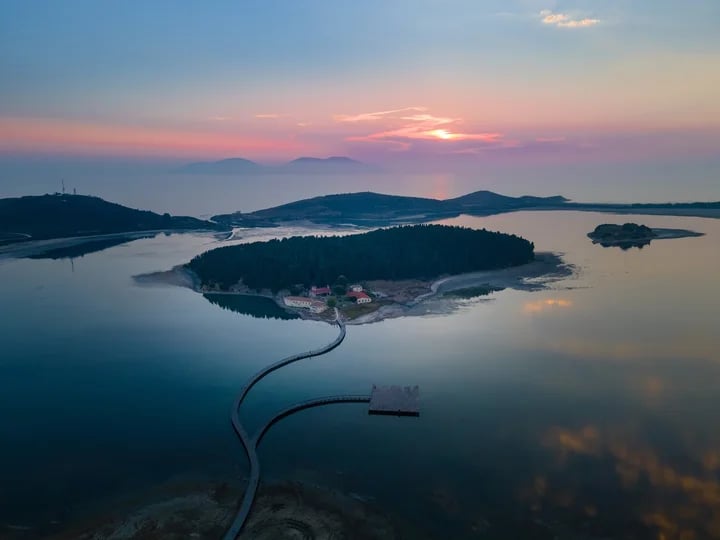
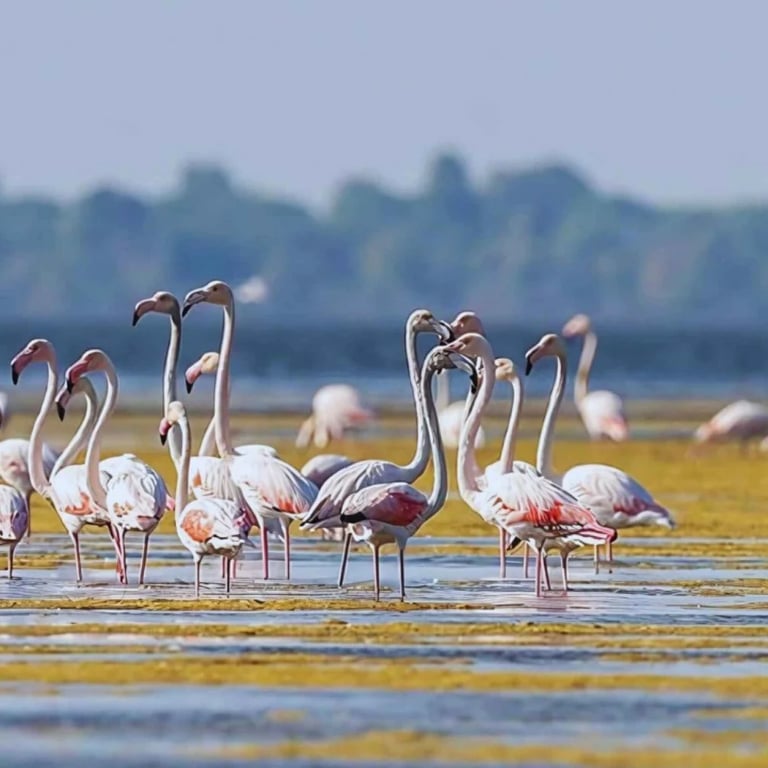
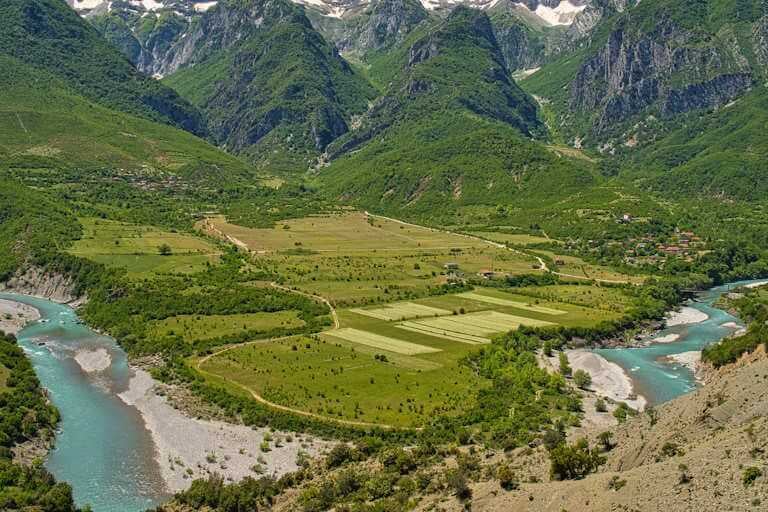
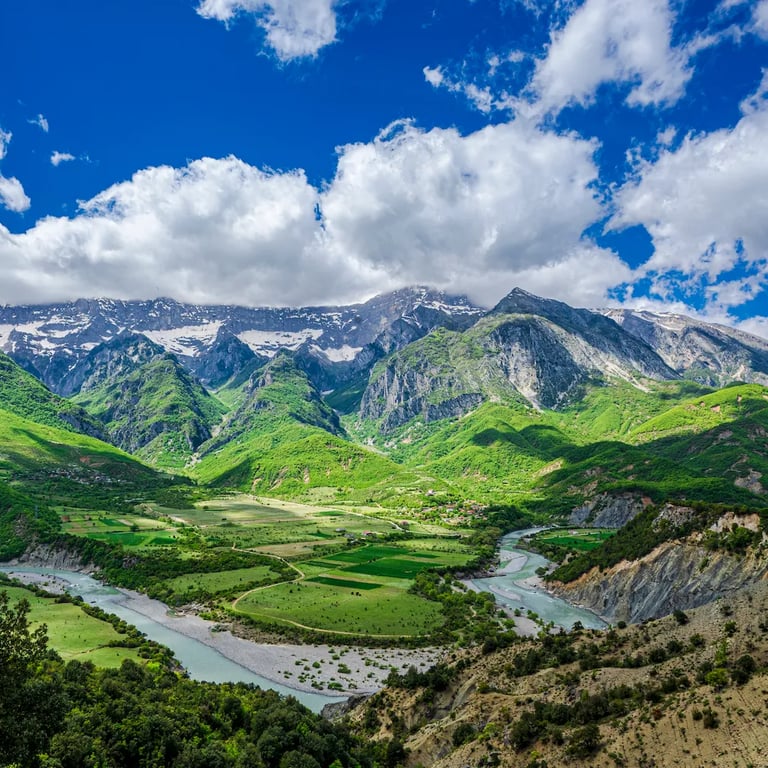
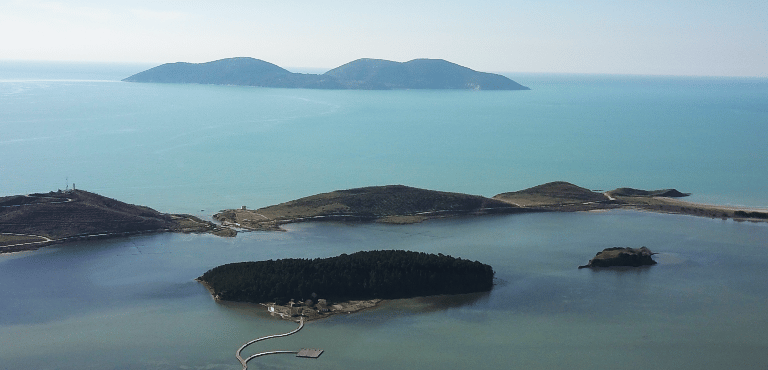
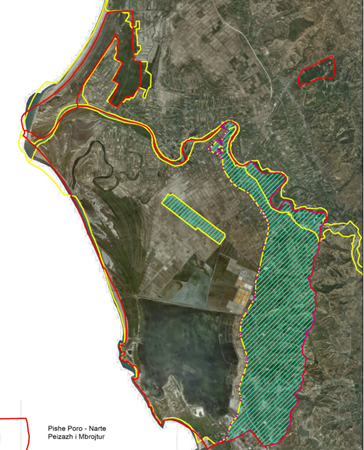
Four areas. Consistent record.
Balkan EU Integration
Albanian Political Development
Regional Security
Diaspora Identity Politics
Enlargement policy, accession chapter compliance, and the institutional culture gap between legislation and enforcement in candidate states.
Electoral dynamics, democratic consolidation, and the structural tensions between Albanian institutional reform and regional political pressures.
Western Balkans security architecture, NATO's role in regional stability, and the geopolitical consequences of stalled EU integration timelines.
How Albanian diaspora communities in Western Europe negotiate cultural identity, political voice, and transnational influence on domestic policy debates.
Available for broadcast, conference, and publication
For media appearances, panel invitations, or analytical contributions to publications covering Eastern European affairs, use the press enquiry form.