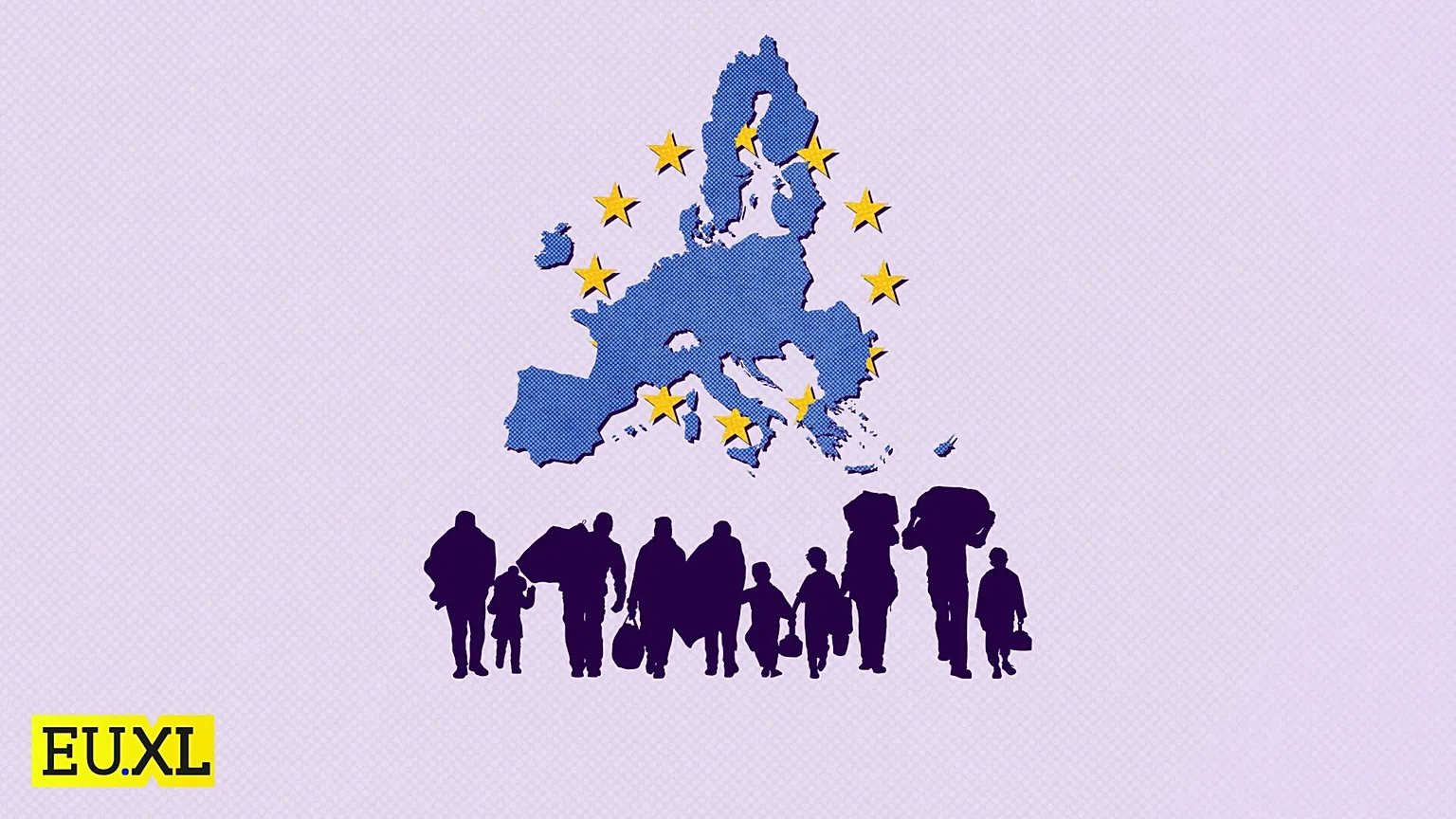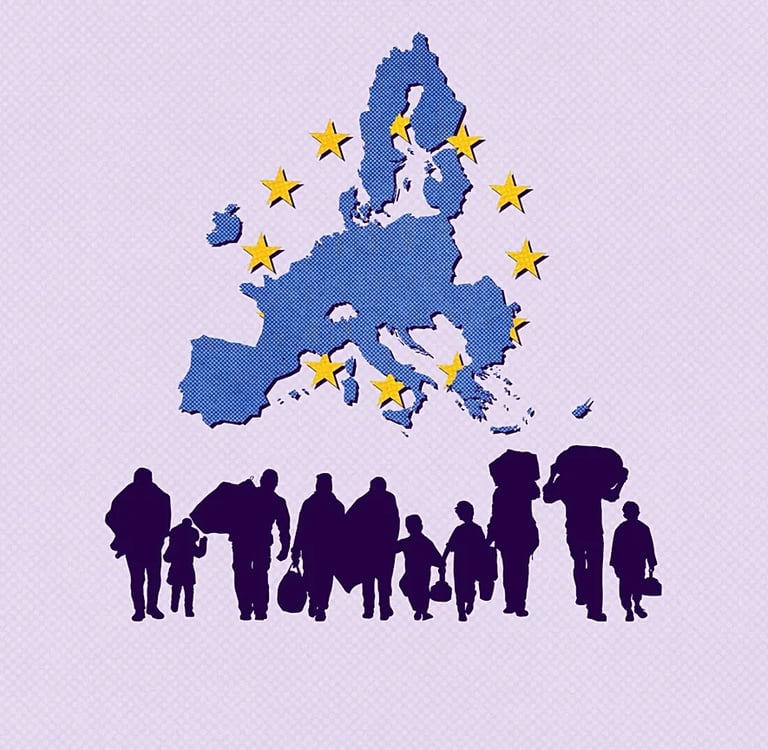
Europe’s Migration Pact Is Not Just About Borders. It Is About Trust.
After a decade of crisis, Europe’s new migration rules will test whether the EU can control its frontiers without sacrificing solidarity, rights, or the promise of free movement.
Europe’s Migration Pact Is Not Just About Borders. It Is About Trust.
After a decade of crisis, Europe’s new migration rules will test whether the EU can control its frontiers without sacrificing solidarity, rights, or the promise of free movement.
By Spartak Fikaj
BRUSSELS — The European Union’s new migration rules arrive with the weight of a decade behind them. They are presented as a legal and administrative overhaul, a long-awaited attempt to bring order to a system that nearly fractured under the pressure of the 2015 migration crisis. But beneath the language of procedures, databases, screenings and solidarity contributions lies a larger and more uncomfortable question: can the European Union govern one of the most emotional political issues of our time without breaking the fragile trust on which the European project depends?
The migration pact is, at its core, an attempt to repair a European contradiction. The Union promises free movement inside its borders, yet that promise depends on confidence that its external borders are managed effectively. It speaks of solidarity among member states, yet migration has repeatedly exposed how uneven and conditional that solidarity can be. It defends fundamental rights, yet increasingly relies on accelerated border procedures and stronger return mechanisms that human rights organisations fear may weaken protections for people seeking asylum. The new rules are therefore not simply about who enters Europe. They are about what kind of Europe emerges from a decade of fear, pressure and political distrust.
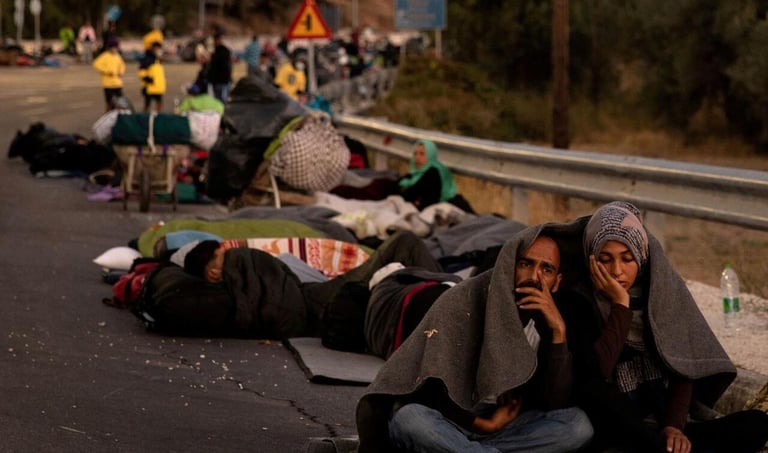
The memory of 2015 still shapes every line of this debate. When more than a million people reached Europe, many fleeing war in Syria, the EU discovered that its asylum architecture was not built for such a moment. Frontline states such as Greece and Italy struggled under the pressure of arrivals. Northern and western countries accused them of failing to register people properly. Several governments reintroduced internal border controls inside the Schengen area, weakening one of the EU’s most visible achievements. The crisis did not merely expose administrative weakness. It exposed a deeper lack of confidence between member states.
That is why the new pact is designed around two ideas that have often pulled Europe in opposite directions: control and solidarity. The first is politically necessary. Governments want to show their citizens that migration is not unmanaged, that arrivals are registered, that asylum claims are examined quickly, and that those without a right to stay can be returned. The second is institutionally necessary. Without some form of burden-sharing, countries at Europe’s southern and eastern edges will continue to argue that they are being left alone to manage a European problem.
The new system seeks to resolve this through border screenings, faster procedures, expanded use of the Eurodac database and a solidarity mechanism under which member states may relocate asylum seekers, contribute financially or provide other forms of support. In theory, this is the compromise Europe has been searching for since 2015: stronger controls for governments demanding order, and structured support for states carrying the heaviest burden. In practice, it is a fragile political machine whose success depends on every component functioning at the same time.
The risk is that the pact becomes another European promise that collapses at the point of implementation. Some member states are already behind in their preparations. Others remain reluctant to accept relocated migrants. Hungary and Slovakia have resisted participation in solidarity measures. Human rights groups warn that border procedures may limit access to full asylum processes and weaken safeguards for vulnerable people. The European Commission insists the new framework can restore confidence, but confidence cannot be legislated into existence. It must be produced through daily administrative capacity, judicial fairness and political honesty.
The Schengen question gives the pact its broader significance. Internal border checks were meant to be temporary exceptions, not a permanent feature of European life. Yet years after the height of the migration crisis, several countries continue to maintain controls, often citing migration as part of the justification. If the new pact works, Brussels will argue that governments have fewer excuses to keep those barriers in place. If it fails, the opposite may happen: the normalisation of internal border checks could slowly erode one of the most meaningful symbols of European integration.
This is why the migration pact is not only a policy reform but a test of European governance. The EU is trying to prove that it can act after years of division, that it can balance national concerns with common rules, and that it can protect both borders and rights. Success would strengthen the argument that shared European solutions remain possible even on the most divisive issues. Failure would empower those who claim that migration can only be handled through national closure, unilateral action and permanent suspicion between states.
There is also a democratic danger. Migration has become one of the most powerful instruments of political mobilisation across Europe. Far-right parties are likely to portray the pact either as too weak to stop arrivals or as another example of Brussels imposing obligations on sovereign states. Progressive critics, meanwhile, may argue that the EU has surrendered too much to the politics of deterrence. Between these positions sits a large and uneasy centre that wants order but does not want Europe to abandon its legal and moral commitments.
For countries outside the Union, including Albania and the Western Balkans, the pact also matters. The region remains part of Europe’s migration geography, whether as a transit route, a partner in border management or a future participant in the EU legal framework. As Albania advances toward membership, alignment with European asylum, migration and border standards will become increasingly important. The pact therefore offers a preview of the system candidate countries will one day be expected to implement: more digital, more coordinated, more security-focused and more closely tied to EU-wide trust.
The deeper truth is that migration has become the place where Europe’s ideals meet its anxieties. The EU wants to be humane, but also controlled. Open internally, but protected externally. Committed to asylum, but impatient with irregular movement. Solidary in principle, but divided in practice. The new pact does not eliminate these contradictions. It organises them.
That may still be an achievement. After a decade of deadlock, Europe has built a framework where none existed before. But the moral and political test begins now. The success of the pact will not be measured by the number of regulations adopted in Brussels, but by what happens at the borders, in reception centres, in asylum offices, in courts and in the lives of people whose futures will be decided by this new machinery.
Europe’s migration crisis was never only about migration. It was about trust: trust between citizens and governments, between frontline and inland states, between national capitals and Brussels, and between Europe’s promises and its practices. The new rules may give the Union a system. Whether they give it back that trust remains the real question.